Length tells you how long something is from one end to the other. It is one of the most basic physical quantities people measure, and it forms the foundation for describing objects, spaces, and distances in daily life, construction, science, and travel. This guide covers the common units used to measure length, how metric and Imperial systems compare, and how to convert between them with confidence.
What Is Length Measurement?
Length measurement is the process of determining how long, tall, or far something extends in one dimension, expressed as a number paired with a unit, such as 5 meters or 12 inches.
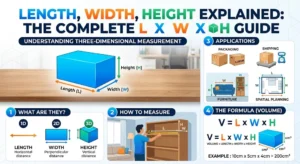
Length specifically describes the extent of an object or space along its longest dimension, or the straight-line extent between two points. It is distinct from a few related terms that are often used loosely in everyday speech:
- Width describes the side-to-side measurement of an object, at a right angle to its length.
- Height describes the vertical measurement of an object, from base to top.
- Distance describes the space between two separate points or locations, rather than the size of a single object.
All four of these use the same units, since they all measure the same underlying physical quantity, but the term applied depends on context and orientation. A table has a length and a width, a person has a height, and a road trip covers a distance. For a broader look at how these terms relate to one another and to other measurement categories, see Types of Measurements: A Complete Guide to Measurement Units.
Everyday Examples of Length Measurement
Length measurement appears constantly in ordinary situations:
- Measuring a wall before hanging a shelf
- Checking the length of a mattress before buying bed sheets
- Reading the length of a hiking trail on a map
- Measuring fabric before cutting it for a sewing project
- Checking a smartphone’s screen size, listed as a diagonal length
Common Length Units
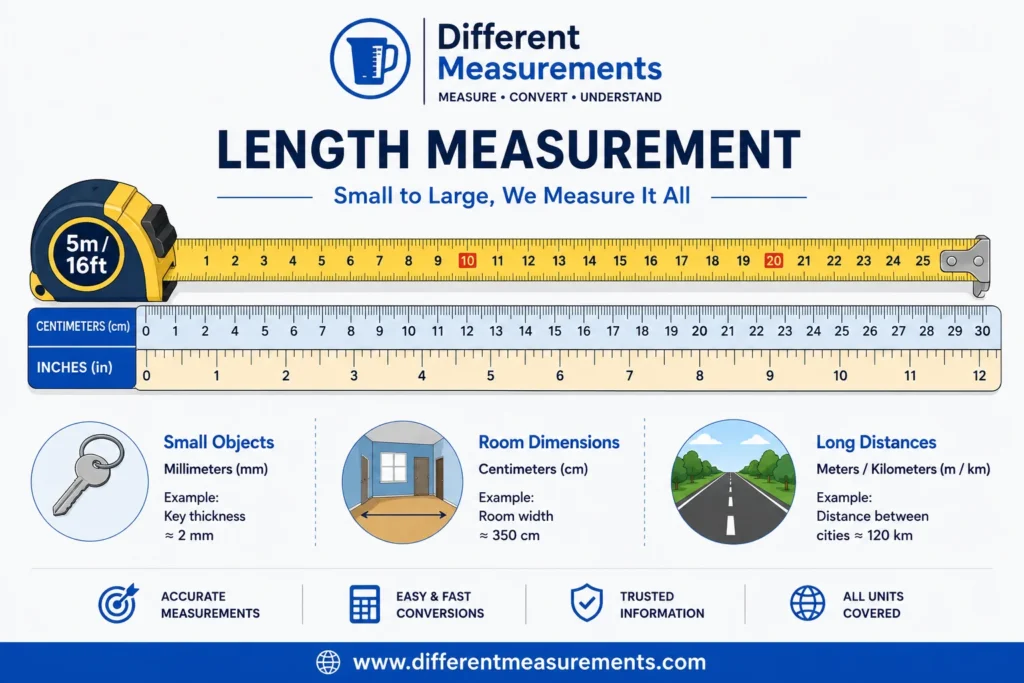
Length is measured using several different units, depending on the size of what is being measured and which measurement system is in use. Short lengths, such as the width of a book, are usually measured in millimeters or inches. Medium lengths, such as room dimensions, typically use meters or feet. Long distances, such as travel between cities, use kilometers or miles.
The two main systems used for length are the metric system, based on the meter and structured around powers of ten, and the Imperial and US customary systems, based on inches, feet, yards, and miles. A more detailed comparison of how these systems apply across all measurement categories is available in Measurement Units: A Complete Guide to Metric, Imperial, and US Customary Units.
Metric Length Units
The metric system uses the meter as its base unit of length, with smaller and larger units created by adding standard prefixes. The meter is also the official SI base unit for length, meaning it serves as the international scientific reference point for all length-related measurement.
| Unit | Symbol | Equivalent in Meters |
| Millimeter | mm | 0.001 m |
| Centimeter | cm | 0.01 m |
| Meter | m | 1 m |
| Kilometer | km | 1,000 m |
Millimeter
A millimeter is one thousandth of a meter and is used for measuring very small objects or fine details. Common examples include the thickness of a coin, the diameter of a screw, or measurements on technical drawings and engineering diagrams.
Centimeter
A centimeter is one hundredth of a meter and is commonly used for measuring everyday objects that are too small to comfortably describe in meters. Examples include the length of a pencil, the width of a smartphone, or a person’s height in some countries, often expressed as centimeters using a measuring tape.
Meter
The meter is the base unit of length in the metric and SI systems. It is used for measuring rooms, furniture, fabric, and short distances such as the length of a swimming pool. A standard doorway, for example, is typically around 2 meters tall.
Kilometer
A kilometer equals 1,000 meters and is used for measuring longer distances, such as the distance between towns, the length of a hiking trail, or the distance covered during a run. Road signs in most countries display distances in kilometers.
Imperial and US Customary Length Units
Imperial and US customary units share the same basic length units, including the inch, foot, yard, and mile, since both systems descend from earlier English measurement traditions. Unlike metric units, these do not scale by powers of ten, and each unit has its own historical definition.
| Unit | Symbol | Equivalent |
| Inch | in | 1/12 foot |
| Foot | ft | 12 inches |
| Yard | yd | 3 feet |
| Mile | mi | 5,280 feet |
Inch
An inch is a small unit of length commonly used for measuring objects such as phone screens, paper sizes, and tools. In the United States, inches are also used alongside feet when describing a person’s height, such as 5 feet 8 inches.
Foot
A foot equals 12 inches and is widely used for measuring room dimensions, furniture, and building heights in the United States and, informally, in the United Kingdom. Ceiling heights, for example, are frequently described in feet.
Yard
A yard equals 3 feet and is commonly used for measuring larger distances that are still relatively short, such as fabric length, garden dimensions, or distances on a sports field. American football fields are measured in yards.
Mile
A mile equals 5,280 feet and is the standard unit for measuring longer travel distances in the United States and the United Kingdom. Road signs, speed limits, and driving directions in these countries typically use miles rather than kilometers.
It is worth noting that while length units like the inch, foot, yard, and mile are shared between the Imperial and US customary systems, this is not true for every category of measurement. Volume units, for instance, differ meaningfully between the two systems, a distinction covered in more detail in the pillar guide on measurement units.
Metric vs Imperial Length Units
Metric and Imperial length units are used in different regions and contexts, and knowing when each applies helps avoid confusion, particularly when reading product specifications, travel information, or international content.
| Feature | Metric System | Imperial / US Customary System |
| Base Unit | meter | foot |
| Small Units | millimeter, centimeter | inch |
| Large Units | kilometer | mile |
| Scaling | Powers of ten | Historical, non-decimal |
| Common Regions | Most of the world | United States, informally the UK |
| Typical Use | Science, most countries’ road signs, construction | US construction, road signs, everyday US measurement |
In practice, most countries use the metric system for road distances, construction, and everyday measurement. The United States remains the primary country using Imperial-derived customary units for daily life, while still using metric units in scientific and some manufacturing contexts. The United Kingdom uses metric units officially but retains miles for road distances and feet or inches informally in everyday conversation.
How Is Length Measured?
Length is measured using tools designed to compare an unknown length against a standard, marked scale. Common measuring tools include:
- A ruler, typically used for small, flat objects such as paper or books
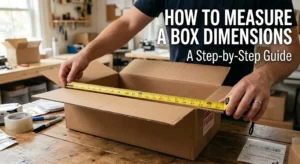
- A measuring tape, used for larger objects, rooms, or curved surfaces
- A laser measuring tool, used in construction for quick, accurate room or building measurements
- An odometer, used in vehicles to measure distance traveled
Each of these tools works on the same basic principle: aligning a starting point with zero on the measuring scale and reading the value at the object’s endpoint. Digital tools follow the same logic electronically, using sensors instead of a physical marked scale.
Real-World Length Measurement Examples
Length measurement applies across nearly every part of daily life and professional work:
- Measuring the length of an object, such as a dining table, to check if it fits in a room
- Measuring the height of a person, using a wall-mounted measuring tape or stadiometer at a doctor’s office
- Measuring the dimensions of a room, including length and width, before buying flooring or furniture
- Measuring road or travel distances, such as the distance from home to work, shown in kilometers or miles depending on the country
- Measuring small objects, such as jewelry, electronic components, or craft materials, typically in millimeters or inches for precision
These examples show how the same underlying concept, length, applies whether the scale is a few millimeters or several hundred kilometers.
How Does Length Conversion Work?
Length conversion means expressing the same physical length using a different unit, without changing the actual size of what is being measured. This is done using a fixed conversion factor, a number that defines the exact relationship between two units.
Within the metric system, conversion is straightforward because units are related by powers of ten. For example, converting meters to centimeters involves multiplying by 100, since there are 100 centimeters in a meter.
Within the Imperial and US customary system, conversion factors are less uniform, since units like inches, feet, yards, and miles were not designed around a consistent base. Converting feet to inches, for example, involves multiplying by 12, while converting miles to feet involves multiplying by 5,280.
Converting between metric and Imperial units requires a specific conversion factor for each unit pair, such as multiplying inches by 2.54 to get centimeters. These conversions are fixed and do not change, which makes them reliable to memorize or reference for common calculations.
Common Length Conversions
The table below summarizes frequently used length conversions within and between the metric and Imperial systems.
| Conversion | Relationship |
| Meters to centimeters | 1 m = 100 cm |
| Centimeters to millimeters | 1 cm = 10 mm |
| Kilometers to meters | 1 km = 1,000 m |
| Feet to inches | 1 ft = 12 in |
| Yards to feet | 1 yd = 3 ft |
| Miles to feet | 1 mi = 5,280 ft |
| Inches to centimeters | 1 in = 2.54 cm |
| Meters to feet | 1 m ≈ 3.28 ft |
These relationships cover the majority of everyday length conversions. For more detailed, category-specific conversion charts and calculators, a dedicated length conversion resource offers deeper coverage than a general overview like this one.
Frequently Asked Questions About Length Measurement
Length measurement is the process of determining how long, tall, or far something extends, expressed as a numerical value paired with a unit such as meters, centimeters, feet, or inches.
There are 100 centimeters in 1 meter.
There are 10 millimeters in 1 centimeter.
There are 3 feet in 1 yard.
There are 12 inches in 1 foot.
There are 1,000 meters in 1 kilometer.
Multiply the number of feet by approximately 0.3048 to get the equivalent length in meters. For example, 10 feet equals approximately 3.048 meters.
Metric length units, such as meters and centimeters, scale by powers of ten and are used officially in most countries. Imperial and US customary units, such as feet, inches, and miles, follow historical, non-decimal relationships and remain in everyday use primarily in the United States, with informal use in the United Kingdom.