Every solid object you can hold, ship, or build has three basic measurements: length, width, and height. Together they describe the size and shape of anything in three-dimensional space, from a matchbox to a moving truck. Get the order wrong, though, and a “12 x 8 x 6” box can turn into the wrong box entirely.
This guide covers what each dimension actually measures, the standard order everyone from architects to shipping carriers relies on, how to measure any object correctly, and how to turn those three numbers into a volume calculation. A dedicated section further down also walks through how this applies specifically to packaging and boxes, where getting the order right affects real shipping costs.
What Are Length, Width, and Height?
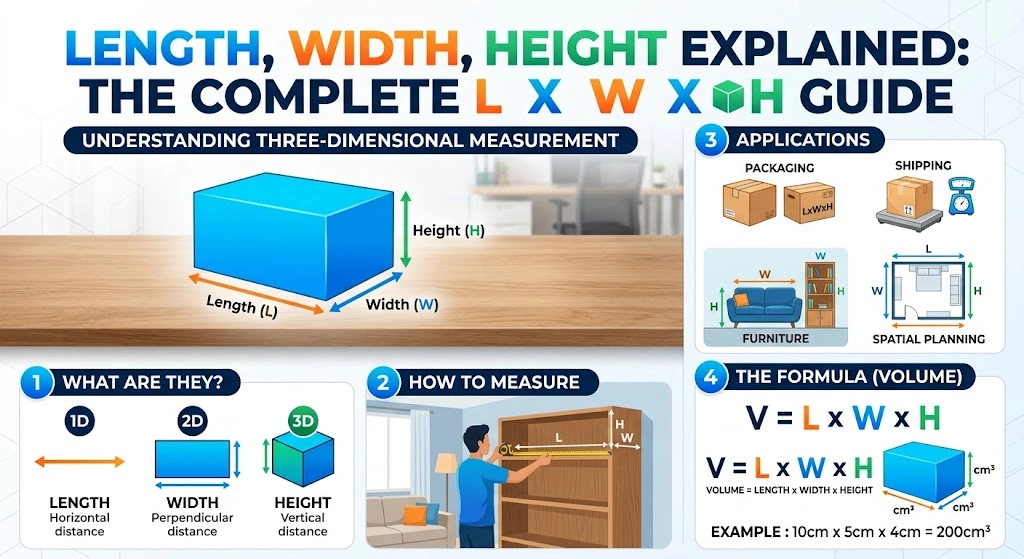
Three dimensions define every physical object with volume. Each one answers a different question about size.
Length measures the longest side of an object, typically from front to back or from one end to the other. It usually represents the greatest horizontal distance on the base of an item.
Width measures from side to side, the horizontal distance across an object, perpendicular to the length. Some fields call this measurement “breadth,” though it means the same thing.
Height measures from bottom to top. This is the vertical dimension, and it always moves upward against gravity, which is exactly what makes it the easiest of the three to identify on sight.
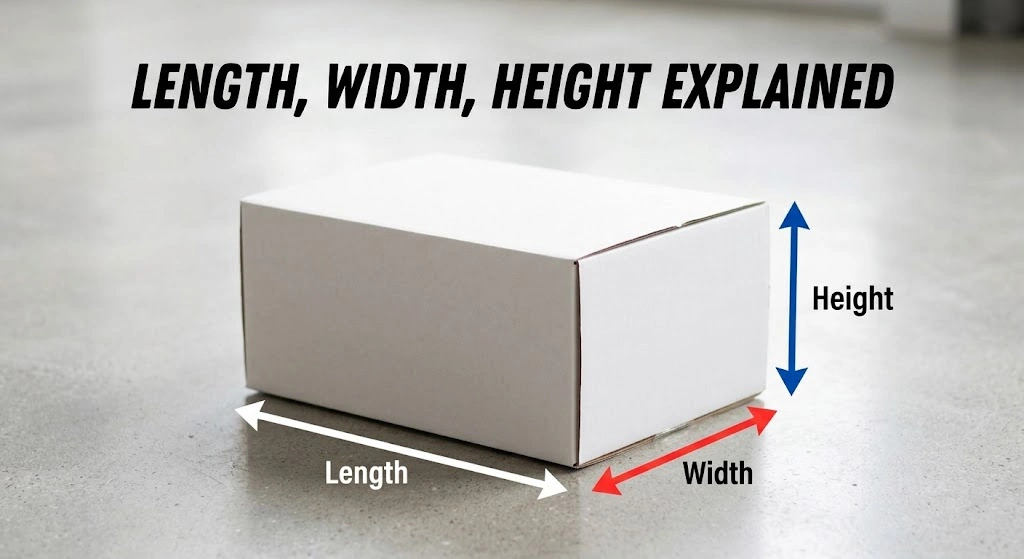
The Standard Order: Length x Width x Height
Product specifications, shipping labels, and furniture listings follow a universal pattern: Length x Width x Height (L x W x H). When you see “12 x 8 x 6 inches” on a listing, the first number is length, the second is width, and the third is height.
This order matters because it removes ambiguity. Furniture makers, shipping carriers, and manufacturers all read dimensions the same way, so nobody has to guess which number means what. Writing dimensions out of order, even though the physical object stays the same, invites confusion and can genuinely lead to costly mistakes when someone downstream assumes the standard sequence.
Length vs Width vs Height: The Key Differences
These three dimensions often get confused, especially width versus depth, since in many contexts “depth” and “length” mean the same thing.
Length vs Height: Length runs horizontally along the ground, describing the greatest front-to-back or side-to-side distance. Height rises vertically into the air. From a front-facing view of most objects, the height is visible while the length often hides behind it.
Width vs Height: Both are measured at right angles to length, but width runs side to side across the front of an object, while height runs from the base straight up. Together, these two dimensions describe how tall and how wide something is, without addressing how far back it extends.
Length vs Width: These two sit at right angles to each other and, viewed from the front, combine to form a two-dimensional outline of an object. Length is the longer of the two straight-line measurements; width is the shorter one, measured perpendicular to it.
| Dimension | Direction of Measurement | What It Tells You |
|---|---|---|
| Length | Front to back, or end to end | The longest straight-line distance |
| Width | Side to side | How wide the object is, at a right angle to length |
| Height | Bottom to top | How tall the object stands, moving against gravity |
How to Measure Any Object: Step by Step
The same basic method works whether you’re measuring a shoebox, a bookshelf, or a shipping crate.
- Place the object on a flat, even surface. An uneven surface throws off every measurement that follows.
- Measure the length first. Find the longest side of the base and run your tape or ruler from one end to the other.
- Measure the width next. Position your tool perpendicular to the length, running across the shorter side of the base.
- Measure the height last. Run the tape from the base straight up to the top of the object.
- Use the same unit for all three measurements (all inches, or all centimeters), and write them down in order as you go, so you don’t have to remember which number was which later.
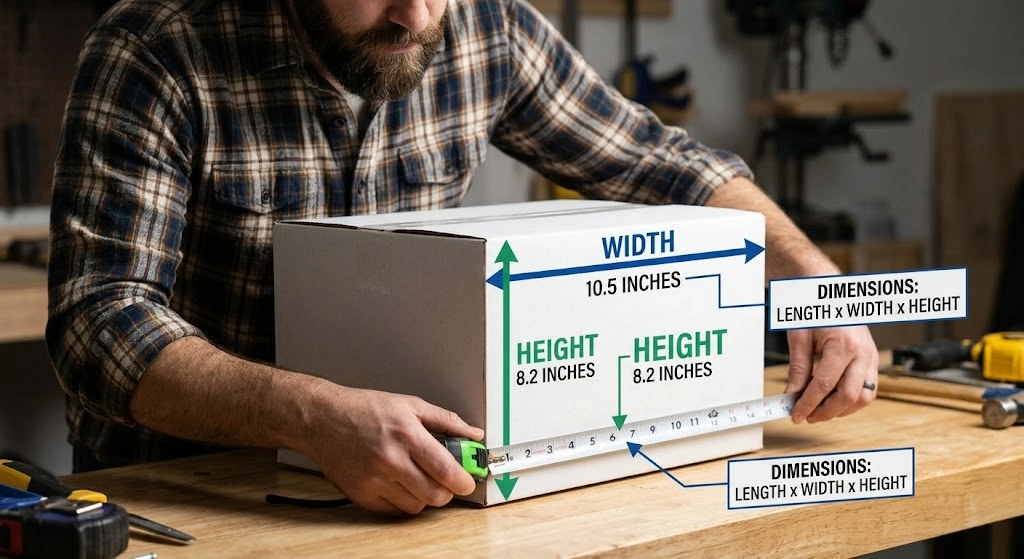
Calculating Volume: The L x W x H Formula
Volume tells you how much three-dimensional space an object occupies. You calculate it by multiplying all three dimensions together:
Volume = Length x Width x Height
For example, an object measuring 16 inches long, 12 inches wide, and 12 inches tall has a volume of 16 x 12 x 12, or 2,304 cubic inches. This calculation matters constantly in shipping, storage planning, and construction, since it tells you exactly how much room something takes up, not just how long any single side happens to be.
Area vs Volume: When You Only Need Two Dimensions
Flat, two-dimensional items, like a photograph, a sheet of paper, or a canvas print, only have length and width, with no meaningful depth. For these, you calculate area instead of volume, using a simpler formula:
Area = Length x Width
A flat item measuring 10 inches by 7 inches has an area of 70 square inches. This formula also comes in handy for calculating square footage of floors, walls, or any flat surface.
2D vs 3D Objects
| Type | Dimensions Used | Common Examples |
|---|---|---|
| 2D (flat) objects | Length x Width | Photographs, documents, canvas prints, stickers, gift cards |
| 3D (solid) objects | Length x Width x Height | Boxes, furniture, appliances, bottles, most everyday items |
Metric vs Imperial: Converting Between Systems
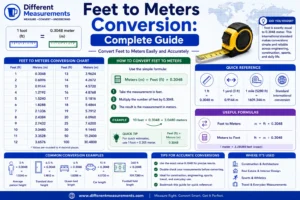
The United States primarily uses the imperial system (inches, feet, yards), while most other countries rely on the metric system (millimeters, centimeters, meters). Converting between the two comes up constantly, whether you’re shopping internationally, following an imported product manual, or shipping goods overseas.
The core conversion to remember: 1 inch equals exactly 2.54 centimeters. Everything else follows from that single number.
| Unit | Equivalent |
|---|---|
| 1 inch | 2.54 cm |
| 1 foot | 30.48 cm |
| 1 yard | 0.9144 m |
| 1 meter | 39.37 in |
Length, Width, and Height in Everyday Contexts
This trio of measurements shows up far beyond shipping boxes.
Furniture and home design: Architects and interior designers plan every room around length, width, and height, making sure a sofa’s length fits a wall, a bookshelf’s height clears a ceiling, and a table’s width leaves room to walk around it.
Digital screens and design: Web and app designers work with width and height constantly, since screens are flat 2D surfaces. CSS properties directly control an image or element’s width and height in pixels or other digital units, and aspect ratio (the proportion between width and height) determines whether an image looks stretched or properly scaled when resized.
Travel and baggage: Airlines commonly add a bag’s length, width, and height together into a single “linear” total to enforce baggage size limits, rather than checking each dimension separately against a limit.
Product listings: Online retailers list length, width, and height so shoppers can judge whether furniture will fit through a doorway, whether an appliance will slot into a kitchen gap, or whether a gift will fit inside a drawer.
A Note on Word Order: “Large” vs “8-Inch”
When you describe an object’s size in a sentence, English grammar has a preferred order for stacking adjectives, and size-related words like “large,” “small,” or a specific dimension typically come before words describing color, material, or purpose. You’d naturally say “a large red box,” not “a red large box.” The same logic applies when writing out product descriptions: leading with the size (“a 12-inch wooden ruler”) reads more naturally than burying it later in the sentence.
How Length, Width, and Height Apply to Packaging
Everything above applies to any object, but boxes and packaging deserve their own section, since getting L x W x H wrong here has direct financial consequences: oversized boxes waste shipping costs and material, while undersized ones risk damaging the product inside.
What Length, Width, and Height Mean on a Box
Applied specifically to a box:
Length is the longest side of the box’s base.
Width is the shorter side of the base, perpendicular to the length.
Height is the vertical distance from the base to the top of the box.
A standard cereal box is a genuinely useful real-world example: viewed from the front, the tallest visible dimension is the height, the side-to-side measurement across the front panel is the width, and turning the box 90 degrees to view the narrow side panel reveals the length (often called the depth in this context), typically only about 2 inches on a standard cereal box, compared to around 12 inches of height and 7.5 inches of width.
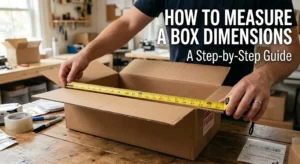
Step-by-Step: How to Measure a Box
- Place the box flat on a surface, with any flaps folded down and closed. Open flaps will throw off your height reading.
- Measure the longest side of the box’s base. Record this as the length.
- Measure the shorter side of the base, perpendicular to the length. Record this as the width.
- Measure from the base straight up to the top. Record this as the height.
- Use the same unit (inches or centimeters) for all three, and note down internal or external, depending on your purpose.
Use a small ruler or calipers for compact boxes, like mailers or jewelry boxes, and a longer tape measure or yardstick for larger shipping cartons.
Internal vs External Dimensions: Which One Do You Need?
This distinction trips up more people than any other part of the measuring process.
Internal dimensions describe the usable space inside the box, the measurement that actually determines whether your product fits. If you’re designing custom packaging for a specific item, internal dimensions are what matter.
External dimensions describe the box’s total outer size, including the thickness of the material itself. Shipping carriers, warehouses, and pallet planning all rely on external dimensions, since that’s the actual footprint the box occupies in transit or storage.
The difference can be small but meaningful. A box with 12 x 10 x 8 inch internal dimensions might measure 12.4 x 10.4 x 8.4 inches externally, once you account for material thickness on every side. That extra fraction of an inch, multiplied across a warehouse full of pallets or a truck full of packages, adds up to real cost differences.
| Use Case | Which Dimensions Matter |
|---|---|
| Checking if a product fits snugly | Internal |
| Calculating shipping cost | External |
| Planning warehouse or pallet space | External |
| Designing custom-fit inserts | Internal |
Why Box Dimensions Affect Shipping Cost
Several major shipping carriers price packages using dimensional weight (DIM weight), a method that charges based on the volume a package occupies, not just its actual physical weight. A large, lightweight box can end up costing more to ship than a smaller, heavier one, simply because it takes up more space in the carrier’s truck or plane.
The dimensional weight formula multiplies length x width x height together, then divides by a dimensional factor the carrier provides, to arrive at a “dimensional weight” figure. Carriers then charge based on whichever is higher: the actual weight or the dimensional weight. This is exactly why oversized packaging, even when the product inside is genuinely lightweight, can quietly inflate a shipping bill. Businesses that measure boxes accurately and avoid unnecessary excess space can meaningfully reduce their annual shipping costs as a result.
When the Standard L x W x H Order Doesn’t Apply
While Length x Width x Height is the accepted default, some industries and box orientations use a different sequence, particularly for boxes that stand upright rather than lie flat.
Height x Width x Length: Common for vertical, standing packaging, like a perfume box or a bottle carton, where height is the dimension customers notice first.
Height x Length x Width: Sometimes used for boxes in a horizontal orientation, placing the front-to-back measurement before the side-to-side one.
Length x Height x Width: Occasionally used when viewing a box from the side, particularly for boxes where length is genuinely the most prominent dimension, such as long, narrow electronics packaging.
The physical box doesn’t change based on which order gets written down, but consistency matters enormously for communication. If a brand’s size guide uses a non-standard order, it’s worth confirming explicitly with a supplier or manufacturer before placing an order, since a mismatched assumption between buyer and manufacturer is one of the most common causes of incorrectly sized packaging.
Common Mistakes When Measuring Box Dimensions
Measuring the wrong part of the box. Confusing internal and external dimensions, or measuring the wrong side as “length,” leads directly to boxes that don’t fit their intended purpose.
Recording measurements in the wrong order. Getting the numbers right but writing them in a non-standard sequence, without flagging that clearly, can cause a manufacturer to build the box with a completely different shape than intended.
Including box flaps in the height measurement. Open or unfolded flaps add extra length to a height reading. Always close the box fully before measuring.
Measuring on an uneven surface. A tilted or uneven surface introduces small errors into every reading that follows.
Mixing units mid-measurement. Switching between inches and centimeters partway through a set of measurements is a fast way to end up with a box that’s the wrong size entirely.
Tools for Measuring Packaging Accurately
- A tape measure for most standard-sized boxes, from small mailers to large shipping cartons.
- A small ruler or digital calipers for compact packaging, like jewelry boxes or cosmetic containers, where precision to the millimeter matters.
- A flexible measuring tape for measuring the perimeter or circumference of round or irregularly shaped packaging.
- A digital L x W x H calculator or app, which can compute volume and dimensional weight instantly once you enter the three measurements, saving a manual multiplication step.
Quick Tips for Getting Box Measurements Right
- Always use a proper measuring tool. Don’t eyeball or estimate a box’s size, since even small errors compound into fit or cost problems.
- Decide upfront whether you need internal or external dimensions, and measure accordingly.
- Stick to one unit throughout the entire process, inches or centimeters, not a mix of both.
- Label each number clearly as you go: L for length, W for width, H for height, so nothing gets transposed later.
- Double-check every measurement before placing a custom order or submitting a shipment, since correcting a mistake after manufacturing or shipping is far more expensive than catching it beforehand.
Frequently Asked Questions
Length comes first, followed by width, then height. The standard order is written as L x W x H.
It’s the standard formula and notation for describing the three dimensions of a solid object, and multiplying the three values together gives you the object’s volume.
Length x Width x Height is the accepted standard across shipping, retail, and manufacturing industries worldwide, used specifically to avoid confusion between suppliers and buyers.
Measure the inside (internal dimensions) if you need to confirm a product will fit. Measure the outside (external dimensions) for shipping cost calculations or warehouse and pallet space planning.
No. Always close a box fully and fold the flaps down flat before measuring height, or the reading will come out too large.
Dimensional weight is a shipping-cost calculation based on a package’s volume (length x width x height, divided by a carrier-specific factor), rather than its actual physical weight. Carriers charge based on whichever number, actual or dimensional, is higher, so an oversized box can cost more to ship even if it’s genuinely lightweight.
Some vertical or specialty packaging uses alternate orders informally, but it’s best practice to stick with the standard L x W x H format whenever possible, and to explicitly confirm the order with a manufacturer if a non-standard sequence is ever necessary.
Conclusion
Length, width, and height are the three measurements behind every solid object’s size, and the standard L x W x H order exists specifically to keep everyone, from furniture shoppers to shipping carriers to box manufacturers, reading dimensions the same way. Multiply the three together and you get volume; measure only two on a flat object and you get area.
For packaging specifically, the added wrinkle is internal versus external dimensions, and the real cost of getting either the order or the measurement itself wrong: ill-fitting products, wasted shipping spend, and unnecessary material waste. Measure carefully, keep the order consistent, and double-check before you order or ship, and these three simple numbers will keep doing their job correctly every time.