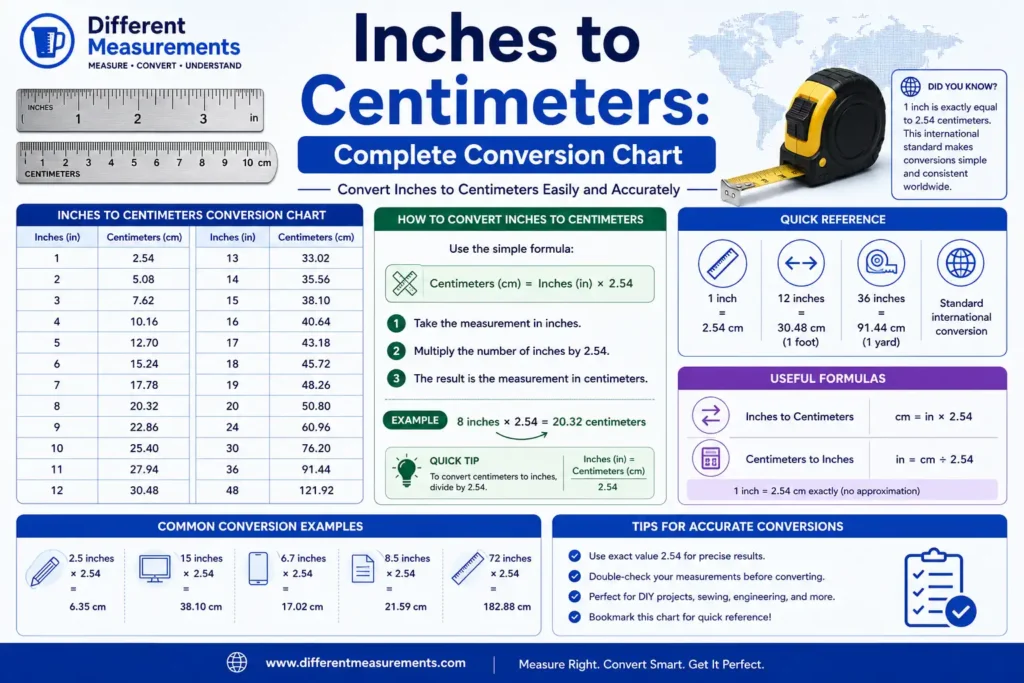
Inches and centimeters are both units of length, but they belong to different measurement systems. Inches are commonly used in the US customary system, while centimeters are part of the metric system. This guide provides the exact inches-to-centimeters conversion formula, a complete conversion chart, common conversions, and practical examples for everyday use.
Inches to Centimeters Conversion Formula
1 inch = 2.54 centimeters
This is an exact conversion, not an approximation.
Formula: centimeters = inches × 2.54
To convert any measurement from inches to centimeters, multiply the number of inches by 2.54.
Example: 5 inches × 2.54 = 12.7 cm
How Many Centimeters Are in an Inch?
There are exactly 2.54 centimeters in 1 inch. This value is exact, defined by international agreement, not a rounded approximation.
Going the other direction, 1 centimeter equals approximately 0.3937007874 inches, or roughly 0.3937 inches when rounded. It is worth keeping in mind that while the inch-to-centimeter conversion is exact, the reverse centimeter-to-inch value is typically expressed as a rounded decimal for practical use.
Inches to Centimeters Conversion Chart
| Inches | Centimeters |
|---|---|
| 1 | 2.54 |
| 2 | 5.08 |
| 3 | 7.62 |
| 4 | 10.16 |
| 5 | 12.70 |
| 6 | 15.24 |
| 7 | 17.78 |
| 8 | 20.32 |
| 9 | 22.86 |
| 10 | 25.40 |
| 11 | 27.94 |
| 12 | 30.48 |
| 13 | 33.02 |
| 14 | 35.56 |
| 15 | 38.10 |
| 16 | 40.64 |
| 17 | 43.18 |
| 18 | 45.72 |
| 19 | 48.26 |
| 20 | 50.80 |
| 21 | 53.34 |
| 22 | 55.88 |
| 23 | 58.42 |
| 24 | 60.96 |
| 25 | 63.50 |
| 26 | 66.04 |
| 27 | 68.58 |
| 28 | 71.12 |
| 29 | 73.66 |
| 30 | 76.20 |
| 31 | 78.74 |
| 32 | 81.28 |
| 33 | 83.82 |
| 34 | 86.36 |
| 35 | 88.90 |
| 36 | 91.44 |
| 37 | 93.98 |
| 38 | 96.52 |
| 39 | 99.06 |
| 40 | 101.60 |
| 41 | 104.14 |
| 42 | 106.68 |
| 43 | 109.22 |
| 44 | 111.76 |
| 45 | 114.30 |
| 46 | 116.84 |
| 47 | 119.38 |
| 48 | 121.92 |
| 49 | 124.46 |
| 50 | 127.00 |
Quick Inches to Centimeters Chart
For the most commonly searched measurements, this shorter chart offers a fast reference.
| Inches | Centimeters |
|---|---|
| 1 | 2.54 |
| 2 | 5.08 |
| 3 | 7.62 |
| 4 | 10.16 |
| 5 | 12.70 |
| 6 | 15.24 |
| 8 | 20.32 |
| 10 | 25.40 |
| 12 | 30.48 |
| 15 | 38.10 |
| 18 | 45.72 |
| 20 | 50.80 |
| 24 | 60.96 |
| 30 | 76.20 |
| 36 | 91.44 |
| 40 | 101.60 |
| 48 | 121.92 |
| 50 | 127.00 |
| 60 | 152.40 |
| 72 | 182.88 |
How to Convert Inches to Centimeters
- Start with the measurement in inches.
- Multiply the value by 2.54.
- Express the result in centimeters.
Example: 8 inches × 2.54 = 20.32 cm
This same three-step process applies regardless of whether the starting measurement is a whole number, a decimal, or a fraction.
Inches to Centimeters Examples
Example 1: 1 Inch to Centimeters 1 × 2.54 = 2.54 cm
Example 2: 5 Inches to Centimeters 5 × 2.54 = 12.7 cm
Example 3: 10 Inches to Centimeters 10 × 2.54 = 25.4 cm
Example 4: 12 Inches to Centimeters 12 × 2.54 = 30.48 cm
Example 5: 24 Inches to Centimeters 24 × 2.54 = 60.96 cm
Example 6: 36 Inches to Centimeters 36 × 2.54 = 91.44 cm
Example 7: Decimal Inches to Centimeters (7.5 inches) 7.5 × 2.54 = 19.05 cm
Example 8: 10.5 Inches to Centimeters 10.5 × 2.54 = 26.67 cm
Example 9: 15.25 Inches to Centimeters 15.25 × 2.54 = 38.735 cm
Decimal Inches to Centimeters
Decimal inches convert using the exact same formula as whole numbers.
Formula: cm = inches × 2.54
| Decimal Inches | Centimeters |
|---|---|
| 0.5 | 1.27 |
| 1.5 | 3.81 |
| 2.5 | 6.35 |
| 7.5 | 19.05 |
| 10.25 | 26.035 |
| 12.5 | 31.75 |
It is worth noting that decimal inches, such as 7.5 inches, should not be confused with feet-and-inches notation, such as 7 feet 5 inches. These represent very different lengths, so it is important to be clear about which format a measurement is using before converting.
Fractional Inches to Centimeters
Fractions of an inch are common in construction, woodworking, and manufacturing, particularly on rulers and tape measures marked in sixteenths of an inch.
| Fraction of an Inch | Centimeters |
|---|---|
| 1/16 in | 0.15875 cm |
| 1/8 in | 0.3175 cm |
| 3/16 in | 0.47625 cm |
| 1/4 in | 0.635 cm |
| 5/16 in | 0.79375 cm |
| 3/8 in | 0.9525 cm |
| 7/16 in | 1.11125 cm |
| 1/2 in | 1.27 cm |
| 9/16 in | 1.42875 cm |
| 5/8 in | 1.5875 cm |
| 11/16 in | 1.74625 cm |
| 3/4 in | 1.905 cm |
| 13/16 in | 2.06375 cm |
| 7/8 in | 2.2225 cm |
| 15/16 in | 2.38125 cm |
To convert any fraction of an inch, first divide the fraction to get a decimal value, then multiply by 2.54. For example, 3/8 inch equals 0.375 inches, and 0.375 × 2.54 = 0.9525 cm.
Mixed Numbers: Inches to Centimeters
Mixed numbers, such as measurements involving both a whole number and a fraction, follow the same basic process. First convert the mixed number to a decimal, then multiply by 2.54.
Example: 2 1/2 inches 2 1/2 inches = 2.5 inches 2.5 × 2.54 = 6.35 cm
Other common mixed-number examples:
| Measurement | Decimal Equivalent | Centimeters |
|---|---|---|
| 1 1/2 in | 1.5 | 3.81 cm |
| 2 3/4 in | 2.75 | 6.985 cm |
| 5 1/4 in | 5.25 | 13.335 cm |
| 7 1/2 in | 7.5 | 19.05 cm |
| 10 3/8 in | 10.375 | 26.3525 cm |
Common Inches to Centimeters Conversions
| Inches | Centimeters | Inches | Centimeters |
|---|---|---|---|
| 1 | 2.54 | 14 | 35.56 |
| 2 | 5.08 | 15 | 38.10 |
| 3 | 7.62 | 16 | 40.64 |
| 4 | 10.16 | 18 | 45.72 |
| 5 | 12.70 | 20 | 50.80 |
| 6 | 15.24 | 24 | 60.96 |
| 7 | 17.78 | 30 | 76.20 |
| 8 | 20.32 | 36 | 91.44 |
| 9 | 22.86 | 40 | 101.60 |
| 10 | 25.40 | 48 | 121.92 |
| 11 | 27.94 | 50 | 127.00 |
| 12 | 30.48 | 60 | 152.40 |
| 13 | 33.02 | 72 | 182.88 |
Inches to Centimeters for Everyday Objects
Inches and centimeters both appear frequently when shopping, building, or crafting, particularly when comparing products from different regions.
- Screen dimensions, such as laptop, TV, and phone screen sizes
- Furniture, including dimensions for tables, shelves, and cabinets
- Clothing measurements, such as inseam length or sleeve length
- Shoe measurements, particularly in specialized sizing charts
- Product dimensions, listed for shipping, storage, or fit
- Packaging, sized to match specific product dimensions
- Crafts, including fabric, paper, and material cutting
- DIY projects, such as shelving, framing, and home improvement
- Hardware, including screws, bolts, and fasteners sized in inches
- Fabric, often sold and measured by the yard or inch in the US
One important detail applies to screens specifically: screen sizes are measured diagonally, so an advertised screen size in inches does not directly represent the screen’s width or height.
Inches to Centimeters for Screen Sizes
The table below converts common diagonal screen sizes from inches to centimeters.
| Screen Size (inches) | Diagonal (cm) |
|---|---|
| 5 | 12.70 |
| 6 | 15.24 |
| 10 | 25.40 |
| 13 | 33.02 |
| 14 | 35.56 |
| 15.6 | 39.624 |
| 17 | 43.18 |
| 24 | 60.96 |
| 27 | 68.58 |
| 32 | 81.28 |
| 40 | 101.60 |
| 43 | 109.22 |
| 50 | 127.00 |
| 55 | 139.70 |
| 65 | 165.10 |
| 75 | 190.50 |
These values represent diagonal screen size only, not screen width or height. Two screens with the same diagonal measurement can still have different widths and heights depending on their aspect ratio, so this chart should not be used to estimate a screen’s physical footprint.
Inches to Centimeters for Feet and Inches
Measurements such as 5 ft 8 in combine both feet and inches, which requires an extra step before applying the inches-to-centimeters formula.
Example: 5 ft 8 in 5 ft = 60 inches 60 + 8 = 68 inches 68 × 2.54 = 172.72 cm
This method is particularly useful for converting human height, which in the United States is commonly expressed in feet and inches but often needs to be expressed in centimeters for international forms, medical records, or comparisons.
Centimeters to Inches
Since users often need to convert in both directions, here is a brief look at the reverse calculation.
Formula: inches = centimeters ÷ 2.54
Examples: 10 cm ÷ 2.54 ≈ 3.94 inches 25.4 cm ÷ 2.54 = 10 inches 50 cm ÷ 2.54 ≈ 19.69 inches
Reverse conversions from centimeters to inches often produce decimal values, since 2.54 does not divide evenly into most centimeter measurements.
Inches vs Centimeters
| Feature | Inch | Centimeter |
|---|---|---|
| System | US customary / Imperial context | Metric |
| Symbol | in | cm |
| Relationship | 1 in = 2.54 cm | 1 cm ≈ 0.3937 in |
| Common uses | US products, dimensions, screens | Metric countries, scientific and everyday measurement |
The modern inch is defined identically whether it is being used in a US customary or Imperial context, so there is no difference in the actual length of an inch between these systems.
Why Is 1 Inch Equal to 2.54 Centimeters?
The international inch has been defined exactly as 2.54 centimeters since an international agreement standardized the value in the mid-20th century. This exact definition ensures that inch-based measurements can always be converted to metric units with complete precision, without any rounding error in the underlying conversion factor itself.
Inches to Centimeters Formula Explained
cm = in × 2.54
- cm = centimeters, the result of the conversion
- in = inches, the starting measurement
- 2.54 = the exact, fixed conversion factor between inches and centimeters
Example: Converting 9 inches: 9 × 2.54 = 22.86 cm
Common Inches to Centimeters Conversion Mistakes
- Dividing instead of multiplying, which produces an incorrect, much smaller result
- Using 2.5 instead of 2.54 when an exact conversion is required, introducing a small but meaningful error
- Confusing inches with feet, particularly when reading measurements quickly
- Confusing decimal inches with feet-and-inches notation, such as mistaking 7.5 inches for 7 feet 5 inches
- Forgetting the unit in the final answer, making the result ambiguous
- Rounding too early in multi-step calculations, which can compound small errors
- Confusing screen diagonal with screen width, leading to incorrect assumptions about a screen’s actual size
- Using an incorrect conversion factor, particularly when relying on memory instead of the exact value
- Mixing inches and centimeters in the same calculation without converting one of them first
Inches to Centimeters vs Inches to Meters
Inches can be converted to either centimeters or meters, depending on which metric unit is more useful for the context.
1 inch = 2.54 cm1 inch = 0.0254 m
Example: 20 inches 20 × 2.54 = 50.8 cm 20 × 0.0254 = 0.508 m
Both results represent exactly the same physical length, simply expressed using different metric units. Centimeters are often more convenient for smaller measurements, while meters are more practical for larger ones.
Common Questions About Inches to Centimeters
There are exactly 2.54 centimeters in 1 inch.
Multiply the number of inches by 2.54 to get the equivalent measurement in centimeters.
The formula is centimeters = inches × 2.54.
2 inches equals 5.08 centimeters.
5 inches equals 12.7 centimeters.
10 inches equals 25.4 centimeters.
12 inches equals 30.48 centimeters.
24 inches equals 60.96 centimeters.
36 inches equals 91.44 centimeters.
There are 30.48 centimeters in 1 foot, since 1 foot equals 12 inches and 12 × 2.54 = 30.48.
Convert the fraction to a decimal first, then multiply by 2.54. For example, 1/2 inch equals 0.5, and 0.5 × 2.54 = 1.27 cm.
Multiply the decimal inch value directly by 2.54. For example, 7.5 inches × 2.54 = 19.05 cm.
Divide the number of centimeters by 2.54 to get the equivalent measurement in inches.
Yes, 1 inch is defined as exactly 2.54 centimeters, with no rounding involved in the conversion factor itself.
Yes, screen sizes are measured diagonally from corner to corner, not by width or height alone.
Converting inches to centimeters comes down to one simple, exact formula: multiply the number of inches by 2.54. Whether working with whole numbers, decimals, fractions, or feet-and-inches measurements, this same factor applies consistently, making it easy to move between US customary and metric length units with confidence.