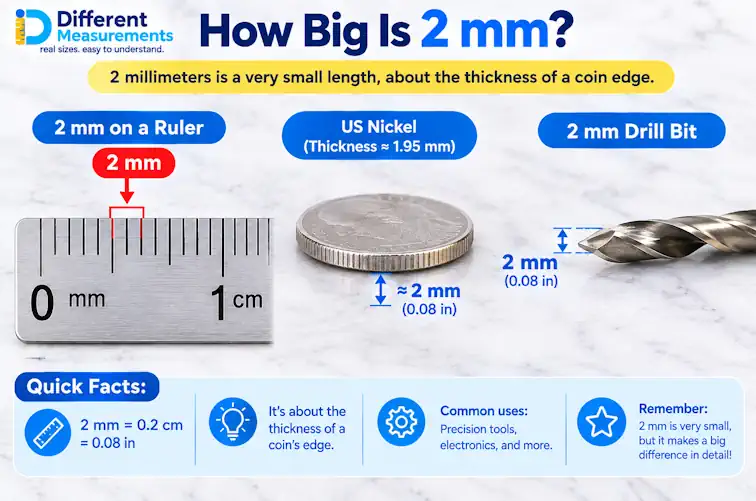
2mm is equal to 0.0787 inches (0.2 centimeters), or about 5/64 of an inch. It is also almost exactly the thickness of a US nickel’s edge, which is 1.95mm.
Two millimeters is small enough to miss in a product listing and large enough to matter in a fitting or a drawing. It shows up in hardware specs, jewelry, craft supplies, bicycle parts, and electronics, and the number on its own does not give much of a picture.
This guide gives you the exact conversions, twelve real objects that measure close to 2mm, a note on how the eye judges small sizes, and simple ways to measure 2mm accurately.
Key Takeaways
- 2mm equals exactly 0.2 centimeters, 0.002 meters, or about 0.0787 inches.
- The closest common fraction is 5/64 of an inch, which is about 1.98mm.
- A US nickel is 1.95mm thick, so its edge is one of the best everyday references.
- Some items, such as a size 0 knitting needle and a 2mm drill bit, are sold to exact 2.0mm sizes.
- Many natural and household items are only roughly 2mm, so check a ruler or caliper when accuracy matters.
2mm Conversion Table
| Unit | Equal to 2mm |
|---|---|
| Centimeters (cm) | 0.2 cm |
| Meters (m) | 0.002 m |
| Inches (in), decimal | 0.0787 in |
| Inches (in), fraction | about 5/64 in |
| Feet (ft) | 0.00656 ft |
| Yards (yd) | 0.00219 yd |
| Micrometers (µm) | 2,000 µm |
| Pixels at 96 DPI | about 7.6 px |
| Pixels at 300 DPI | about 23.6 px |
Nearby Sizes in Millimeters and Inches
| Millimeters | Inches (decimal) | Nearest fraction |
|---|---|---|
| 1 mm | 0.0394 in | 1/32 in (0.79 mm) |
| 1.5 mm | 0.0591 in | 3/64 in (1.19 mm) |
| 2 mm | 0.0787 in | 5/64 in (1.98 mm) |
| 2.5 mm | 0.0984 in | 3/32 in (2.38 mm) |
| 3 mm | 0.1181 in | 1/8 in (3.18 mm) |
The fraction 5/64 inch is 1.984mm, so it is a very close match but not exact. For ordinary visual comparisons, the difference does not matter. For machining, jewelry settings, or tight fits, use the decimal value.
What Does 2mm Look Like?
Two millimeters is about the width of a standard wood pencil’s lead core, a little wider than a thin fine-tip marker’s nib, and about the same as the width of a long-grain rice kernel. Picture the tip of a sharp pencil or a small bead, and you are close.
Most people can see 2mm clearly at arm’s length, but judging it accurately is harder. Below about half a centimeter, the eye tends to guess, so a physical reference helps.
12 Real Objects That Are About 2mm
Items marked “exact” are standardized or sold to a defined size. Items marked “about” vary by make, species, or production batch.
1. A US Nickel’s Edge (Close)
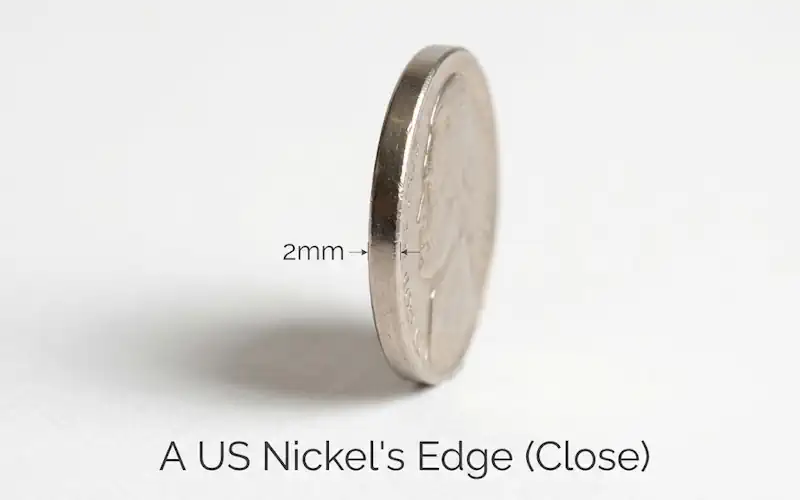
A US nickel is 1.95mm thick. Its edge is the most accessible reference because every nickel in circulation is produced to the same specification. Stand the coin on its edge against a ruler to see how closely it matches.
2. An SD Memory Card (About 2.1mm)
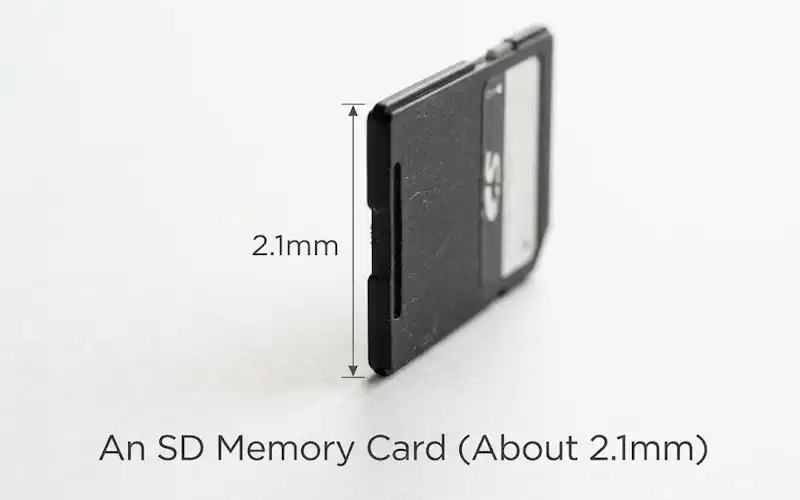
A full-size SD card is about 2.1mm thick. The card’s standard size is fixed, so every full-size card matches. Look at the card edge on, and you have a close and reliable reference.
3. A Size 0 Knitting Needle (Exact)
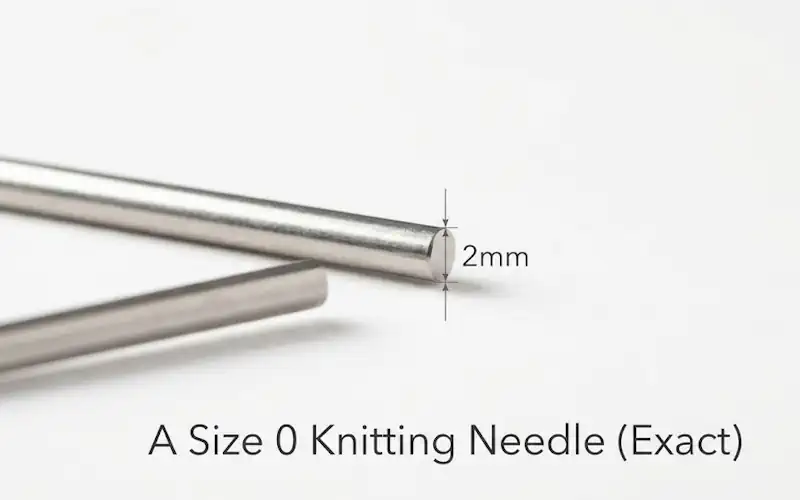
A US size 0 knitting needle is 2.0mm in diameter. Knitters use it for fine yarn and sock patterns, and its diameter is printed in millimeters on most needle packages, so it is easy to check.
4. A 2mm Drill Bit (Exact)
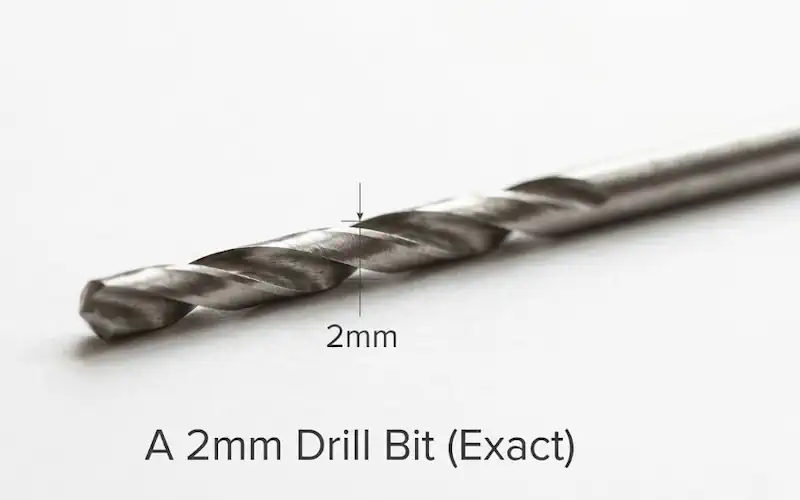
Metric drill bits are sold in exact sizes, and a 2mm bit is common in sets for pilot holes and small craft work. Hold the bit’s cutting tip against a ruler to see the true width.
5. A Bicycle Spoke (About 2mm)
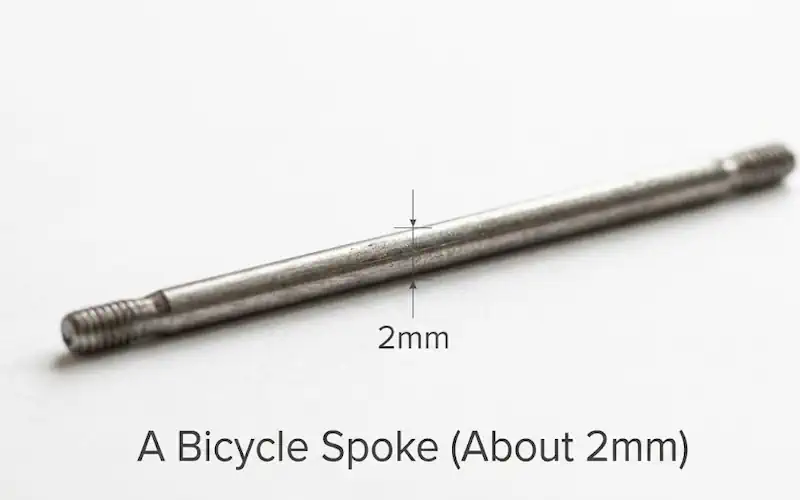
Many bicycle spokes are about 2.0mm in diameter, which is commonly listed as 14 gauge. Spoke thickness is standardized for each wheel type, so this is a dependable visual for a 2mm wire.
6. A Standard 12 AWG Electrical Wire (About 2.05mm)
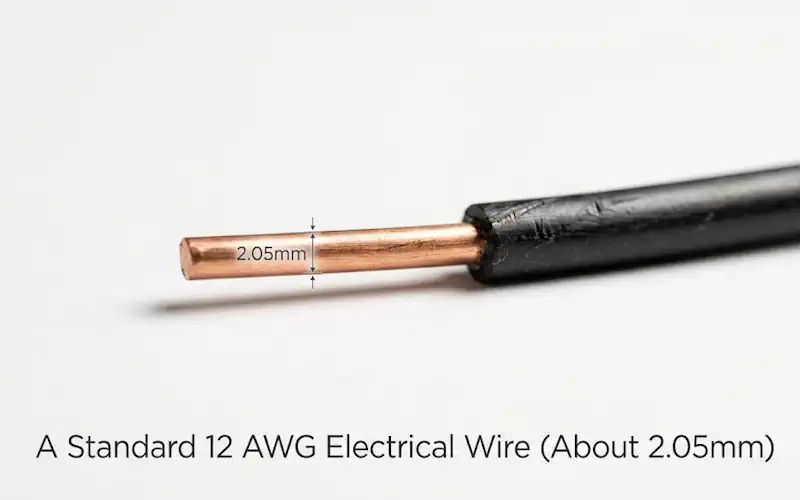
12 AWG wire, the size used for many household circuits, has a bare diameter of about 2.05mm. The wire’s copper core is close to 2mm, which makes it a practical comparison for anyone working with electrical supplies.
7. A Mustard Seed (About 1 to 2mm)
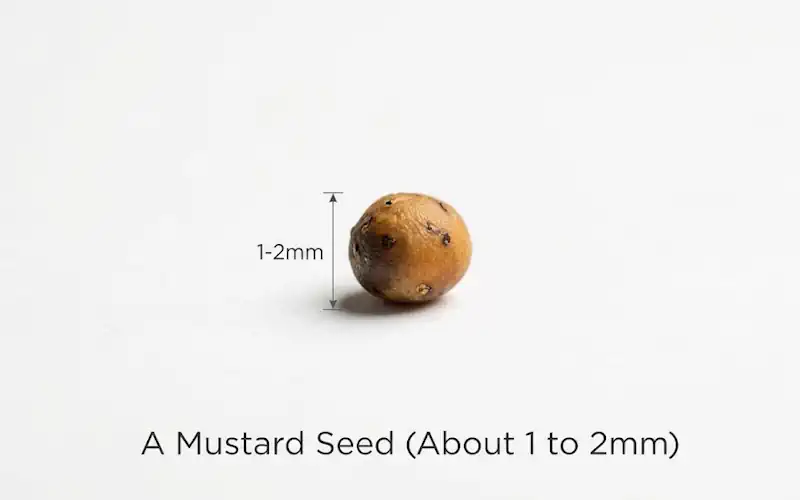
Mustard seeds are roughly 1 to 2mm in diameter, depending on the variety. They are easy to find in most kitchens, which makes them a handy natural reference, though the size varies from seed to seed.
8. A Grain of Long-Grain Rice (About 2mm Wide)
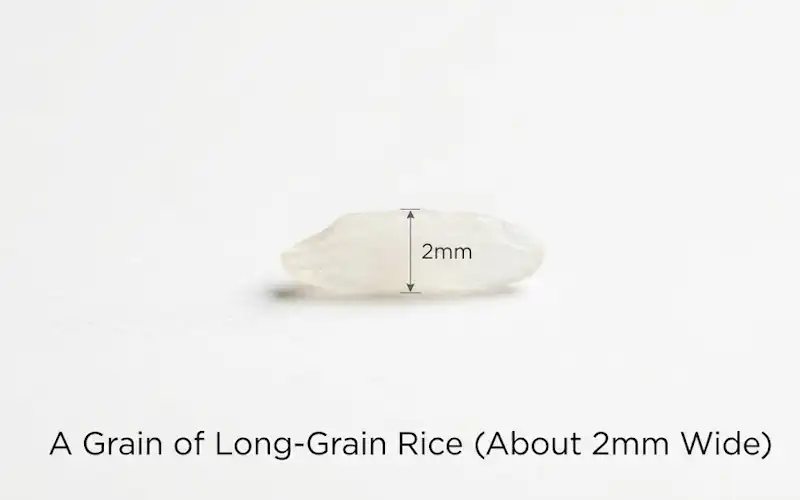
The width of a long-grain rice kernel, such as basmati or jasmine, is usually around 2mm. The grains are longer than they are wide, so look at the width rather than the length when comparing.
9. A Ceramic Tile Spacer (Nominal 2mm)
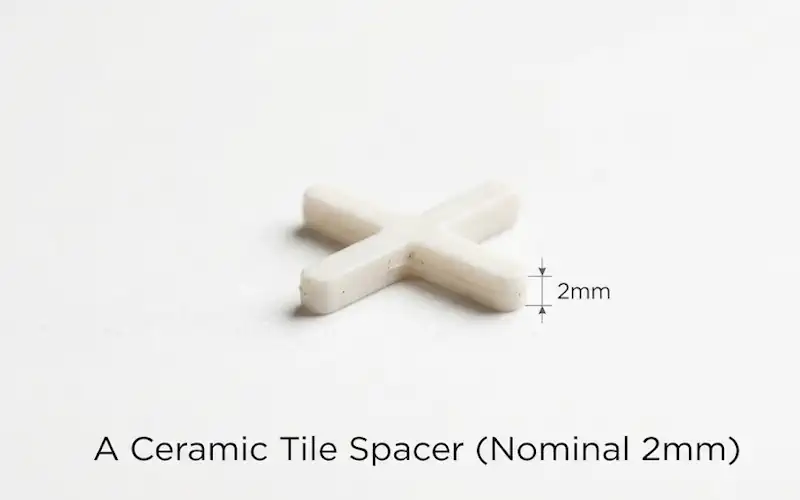
Tile spacers are sold in nominal sizes, and 2mm spacers are common for small-format tiles. They are a good practical reference, since the spacer must match the gap you need.
10. An M2 Screw (Nominal 2mm)
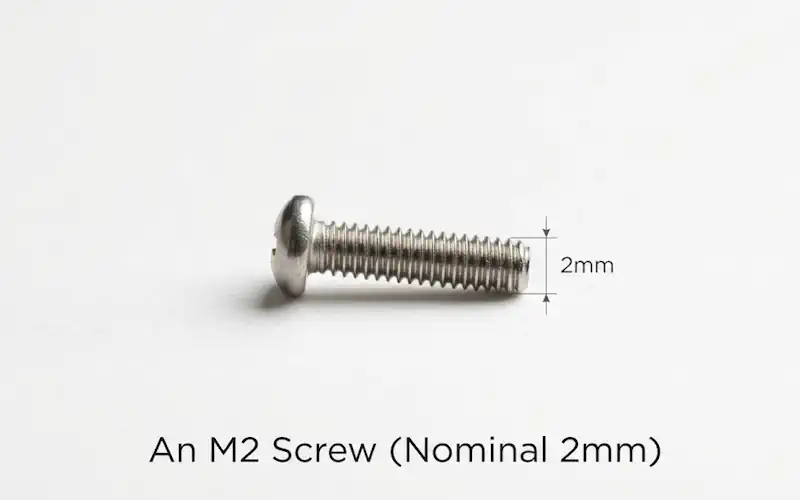
An M2 screw has a nominal thread diameter of 2mm under the metric standard. The number in the name refers to that diameter, although the screw length and head style vary, so check the full specification before buying.
11. A Matchstick (About 2mm)
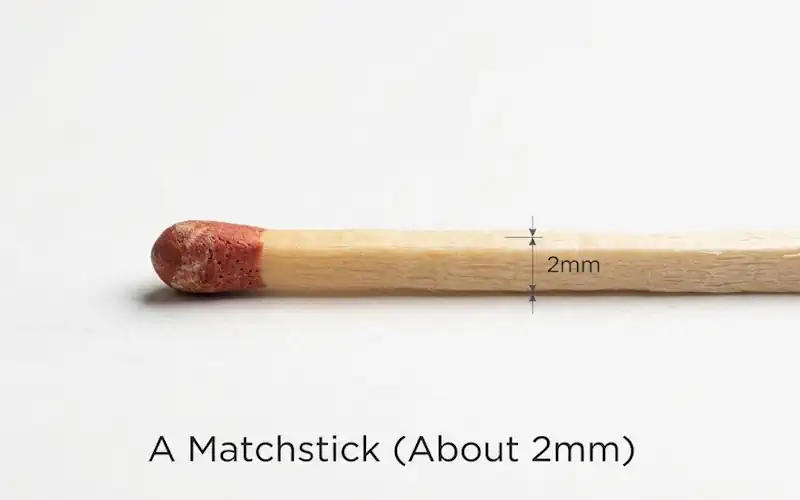
A common wooden matchstick is roughly 2mm thick. Matchstick sizes vary by manufacturer, so treat this as a rough reference rather than a fixed measurement.
12. A Coarse Sea Salt Crystal (About 2mm)
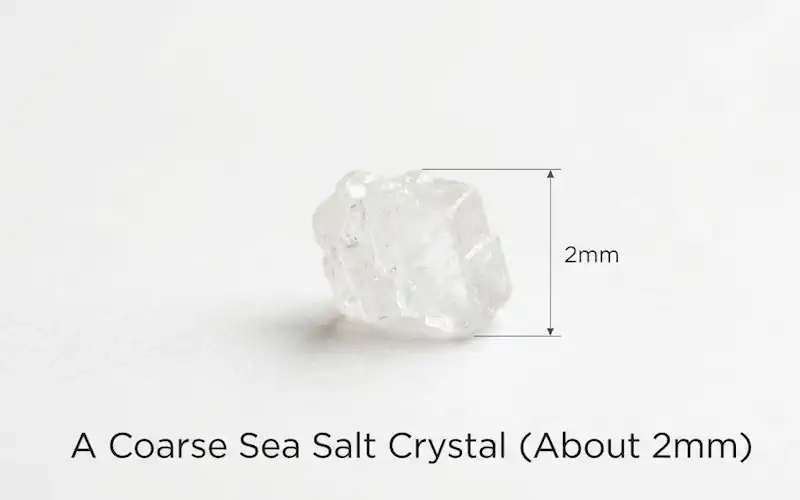
Coarse sea salt crystals are often close to 2mm across, although they vary by grind and brand. Their irregular cube shape makes them a natural but imprecise comparison.
How 2mm Compares to Other Small Sizes
| Size | How it compares to 2mm |
|---|---|
| 0.5 mm | One-quarter as large |
| 1 mm | Half as large |
| 1.5 mm | Three-quarters as large |
| 2.5 mm | 0.5 mm larger |
| 5 mm | Two and a half times as large |
| 1/16 inch (1.59 mm) | About 0.4 mm smaller |
| 1/10 inch (2.54 mm) | About 0.54 mm larger |
Two millimeters is one-fifth of a centimeter and one five-hundredth of a meter. For a closer look at a slightly bigger size, see How Big Is 5mm?
How to Measure 2mm
With a metric ruler: Find a numbered centimeter line, then count two of the smallest one-millimeter divisions from it. Read the scale straight on to avoid parallax error, which happens when the ruler is viewed at an angle.
With an inch ruler: Look for 5/64 inch, but remember that most inch rulers only divide to 1/16 inch. In that case, 2mm sits just past the 1/16 mark.
With digital calipers: Calipers read to 0.01mm and are the right tool for any fitting, machining, or jewelry work. Close the jaws gently, especially on soft materials like foam or rubber, since squeezing can change the reading.
Without a ruler: Use a US nickel’s edge (1.95mm), a size 0 knitting needle (2.0mm), or a 12 AWG wire (about 2.05mm) as a quick check.
From a screen: Do not trust a 2mm line on a screen unless it has been calibrated. Screen size, zoom, and scaling all change how large a line appears.
Common Mistakes When Estimating 2mm
- Confusing 2mm with 2cm. 2 centimeters is 20mm, ten times larger. This is one of the most common decimal errors.
- Treating every “2mm” label as exact. Hardware and tools are often nominal, while natural items vary.
- Mixing up diameter and length. A 2mm bead may have a differently sized hole, and a 2mm screw may have a wider head.
- Assuming 2mm equals one-tenth of an inch. One-tenth of an inch is 2.54mm, about 27 percent larger.
- Trusting online images. Browser zoom and screen size change how large a 2mm image appears.
Conclusion
Two millimeters equals 0.0787 inches or 0.2 centimeters. It is easiest to picture as a US nickel’s edge, a size 0 knitting needle, or a long-grain rice kernel’s width. For exact work, use digital calipers, and for quick estimates, use the everyday references above.
FAQs
2mm equals about 0.0787 inches, or roughly 5/64 of an inch.
No. 1/16 inch is 1.59mm, so 2mm is about 0.4mm larger.
A US nickel’s edge is 1.95mm thick, which makes it one of the closest and most accessible references.
Yes. A 2mm object is easy to see at arm’s length, although judging its exact size takes practice.
Use a US nickel’s edge, a size 0 knitting needle, or a 12 AWG wire as a rough check.
It is considered thin for most solid objects, but it is thick enough for many structural parts, wires, and jewelry components.
Five of them. One centimeter is 10mm, and 10 divided by 2 is 5.