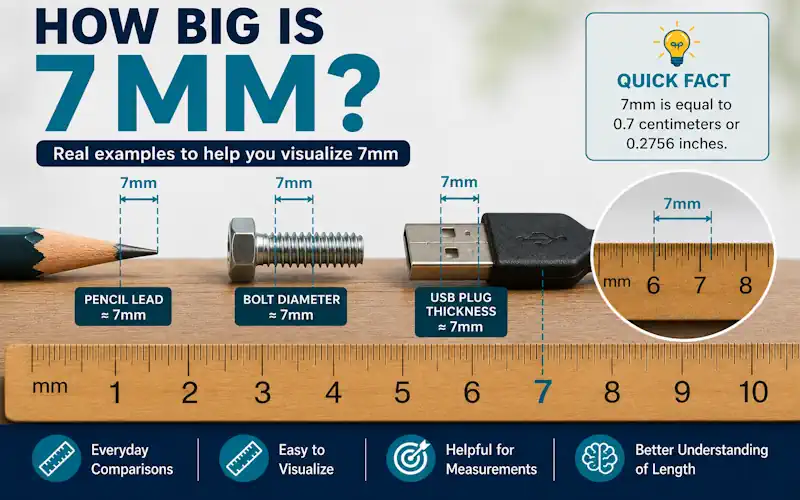
Have you ever wondered how big is 7mm? A size of 7 millimeters is equal to:
- 0.7 centimeters
- 0.275 inches
- 7 millimeters
It’s a very small measurement, but it’s still easy to spot once you compare it with familiar objects. 7mm is slightly wider than a standard pencil tip and close to the thickness of small electronic parts, beads, or jewelry pieces.
If you’re trying to picture this size without a ruler nearby, everyday items make it much easier. Many people search for “what does 7mm look like” or “7mm examples” because a number on its own is hard to imagine. You may also come across searches for what does 3mm look like, especially when comparing smaller measurements. In this guide, you’ll find common objects that are close to 7mm so you can estimate the size quickly whenever you need to.
7mm Conversion Chart
Quick and accurate measurement conversions
| Unit | Converted Value |
|---|---|
| Centimeters | 0.7 cm |
| Meters | 0.007 m |
| Inches | 0.276 in |
| Feet | 0.023 ft |
Need to convert a different size? Try our converter for instant results with any number.
How Big Is 7mm?
A 7mm measurement is small enough to rest comfortably on a fingertip, yet large enough to notice clearly with your eyes. It shows up often in jewelry sizing, screws, beads, phone components, and small craft materials. Since 7mm works out to about 0.275 inches, it’s a little over one-quarter of an inch.
7 mm = 0.7 cm = 0.275 inches
If you work with tools, crafts, or measurements regularly, knowing what 7mm looks like can save time you won’t always have a ruler within reach, so visual comparisons come in handy. A 7mm object is close to the width of a small pea or the thickness of a few stacked coins. It’s noticeably smaller than references like a full inch or two, but still large enough to compare confidently with everyday items.
Plenty of small accessories are built around this measurement too. Earrings, gemstones, screws, and drill bits often come in 7mm sizes. In home improvement work, 7mm frequently appears in bolts and socket tools. If you enjoy jewelry making or crafts, you’ve likely come across 7mm beads or buttons as well.
Because it’s such a practical, commonly used size, understanding 7mm can help with shopping, crafting, home projects, and even estimating dimensions on the go.
Ways to Estimate 7mm Without a Ruler
Sometimes you just need a quick estimate without reaching for a measuring tool. Here are a few simple ways to do it.
Using Your Fingers
The thickness of your little fingernail is close to 7mm for many adults, making it one of the easiest built-in references you’ll always have on hand.
Using Coins
A small stack of thin coins can help you picture 7mm the combined thickness lands close to this size when a few coins are stacked together.
Using Everyday Items
Many small beads, peas, and electronic connectors sit right around 7mm wide. Glancing at these familiar objects gives you a fast, reliable sense of the measurement.
If you’ve compared measurements such as 2 inches or 6 inches before, you’ll see that 7mm is significantly smaller, making it more suitable for small and delicate objects.
Quick Table of Common Things That Are 7mm Big
| Common Item | Approximate Size |
|---|---|
| Pencil eraser thickness | 7mm / 0.275 inches |
| Small pea | 7mm / 0.275 inches |
| Jewelry bead | 7mm / 0.275 inches |
| Phone charging pin width | 7mm / 0.275 inches |
| Standard shirt button thickness | 7mm / 0.275 inches |
| Small marble | 7mm / 0.275 inches |
| Screw head diameter | 7mm / 0.275 inches |
| Blueberry width | 7mm / 0.275 inches |
| Earbud speaker opening | 7mm / 0.275 inches |
1. Pencil Eraser Thickness
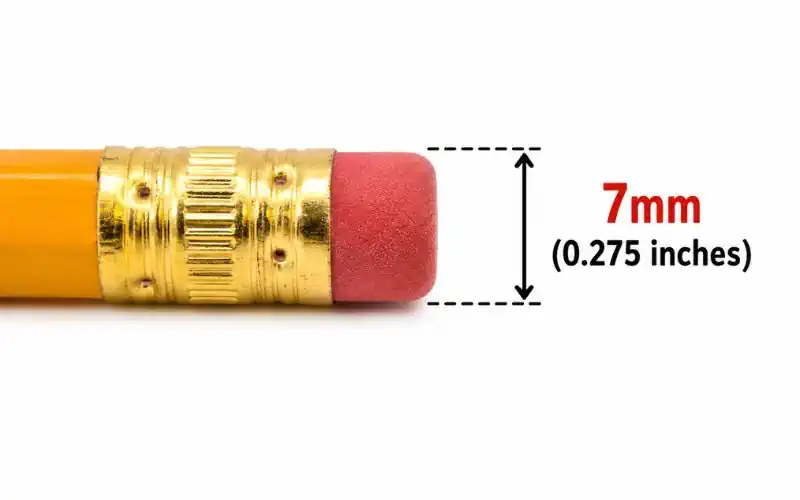
A pencil eraser is one of the simplest ways to picture 7mm. Many standard erasers are close to this thickness hold a pencil upright and look at the eraser from the side, and the width often lands right around 7mm. It’s a comparison that students, artists, and office workers can all relate to instantly.
Because pencils sit on nearly every desk, this example makes it easy to estimate the size without any measuring tools. The eraser is small but still clearly visible, which matches the practical, noticeable feel of a 7mm measurement a useful mental anchor whether you’re shopping for art supplies or just trying to picture a size someone mentioned.
2. Small Pea
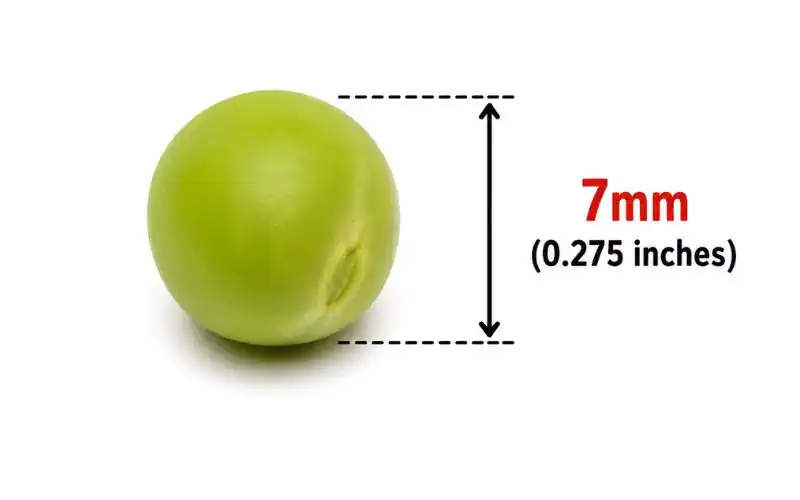
A small green pea is another familiar object that helps explain what 7mm looks like. Most peas have a width close to this measurement, though size can vary slightly depending on the variety.
Peas make a great comparison because they’re round, familiar, and easy to picture instantly. Holding one between your fingers gives you a clear, tangible sense of the size small, but far from microscopic. This kind of comparison is especially handy in cooking and gardening, where seed and vegetable sizes are frequently measured in millimeters, and it’s also a natural fit for describing pea-sized portions of cream, glue, or cosmetic products.
3. Jewelry Bead
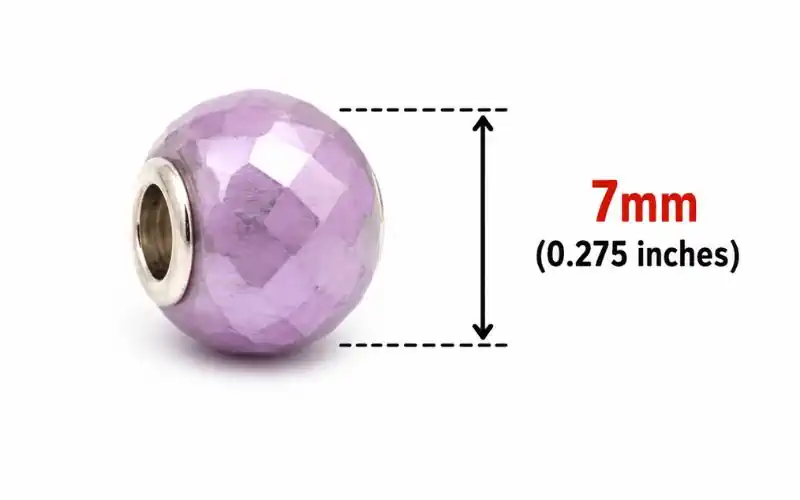
Many beads used in bracelets and necklaces measure close to 7mm wide, making them one of the best visual references for this size. If you’ve ever held a bracelet bead between your fingers, you already have a solid feel for what 7mm looks like.
A 7mm bead is small enough for detailed jewelry work but large enough to stand out in a finished design — a balance that makes it popular for necklaces, earrings, and handmade crafts. Because beads are round and symmetrical, they show the measurement clearly no matter which angle you view them from, which is why crafters rely on millimeter precision when ordering beads or planning a design.
4. Phone Charging Pin Width
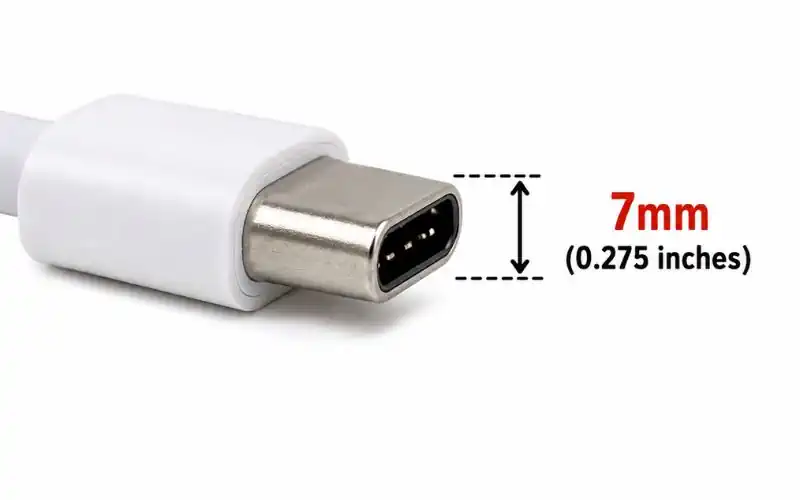
Some phone charging connectors and pins come in close to 7mm wide. While the exact size varies by device, this comparison gives a modern, everyday reference most people can relate to immediately.
Charging ports are compact but still noticeable — large enough to handle comfortably, yet precisely sized to fit correctly. Electronics rely heavily on exact millimeter measurements, since even a small difference can affect how well a connector fits. Since most people plug in a charging cable daily, it’s a practical, familiar way to picture just how small 7mm really is.
5. Standard Shirt Button Thickness
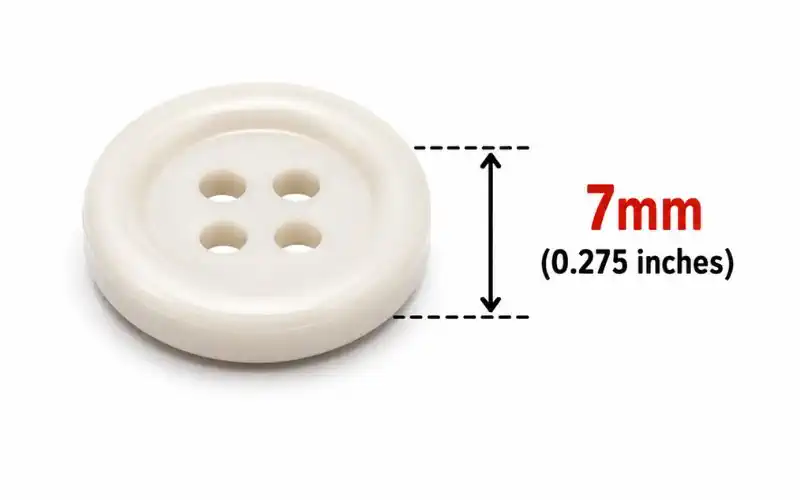
A small shirt button often measures close to 7mm in thickness or width, making buttons another easy way to picture the size. Dress shirts, children’s clothing, and lightweight jackets commonly use buttons around this dimension.
Buttons are a convenient comparison because they’re handled often — you can feel the thickness directly with your fingers and compare it to something like your fingernail. Fashion designers and tailors work with millimeter precision when selecting buttons and trims, since even small size changes affect how a garment looks and functions, and a 7mm button typically gives a neat, minimal appearance.
6. Small Marble
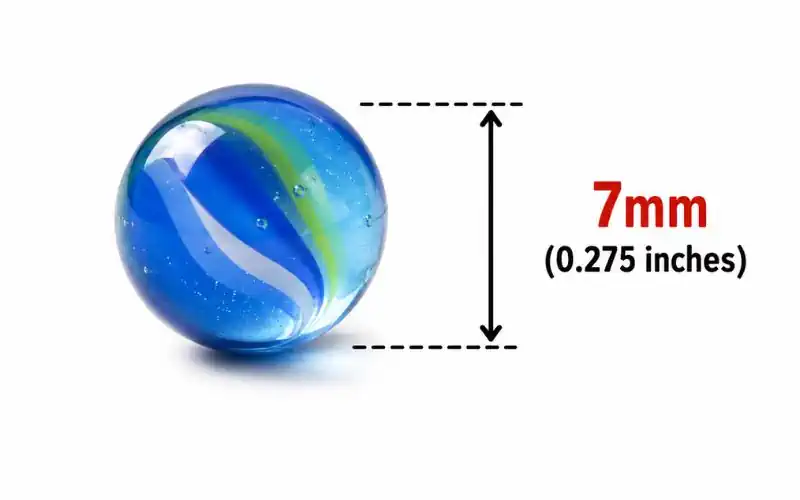
Some smaller toy marbles measure around 7mm in diameter. These compact marbles are often used in crafts, decorations, or miniature games, and their round shape makes them easy to compare visually with other 7mm objects.
A marble-sized reference works well because it’s easy to hold and rotate between your fingers, letting you clearly feel just how small 7mm is. Since marbles are perfectly round, they demonstrate the measurement from every angle — a more well-rounded comparison than flat objects like buttons or cards, and one that toy makers and craft artists use often when designing sets or decorative pieces.
7. Screw Head Diameter
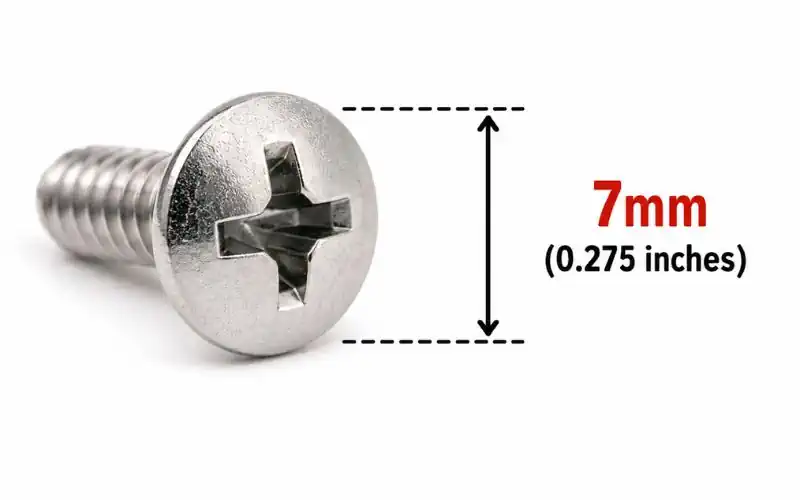
Many small screws used in electronics and furniture assembly have heads close to 7mm wide, making screw heads a genuinely practical example of this size. When putting together furniture or repairing electronics, it’s easy to notice just how compact these heads really are.
A 7mm screw head is large enough for tools to grip securely, yet small enough to fit into tight spaces — which is why hardware stores commonly label sockets and wrenches using millimeter sizes for smaller bolts and fittings. This makes it one of the most useful real-world references for DIY enthusiasts and mechanics who need to picture 7mm quickly.
8. Blueberry Width
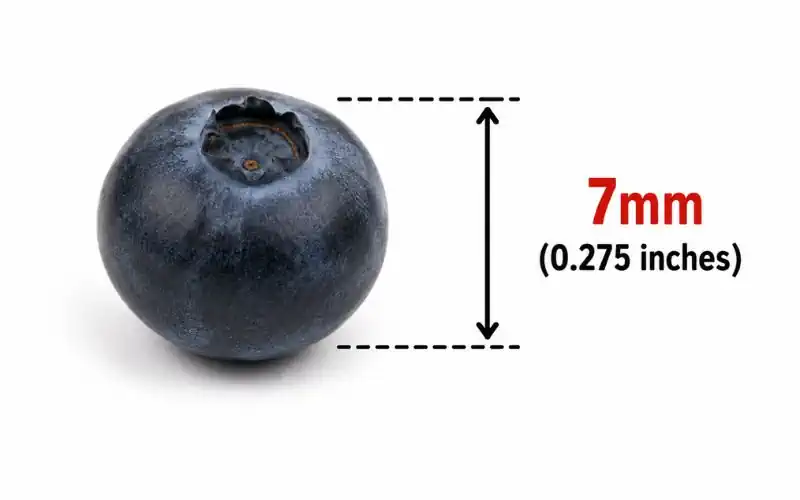
A medium blueberry is often close to 7mm wide, making it a tasty and completely natural example of this measurement. Blueberries are slightly larger than peas and have a rounded shape that’s easy to compare visually.
Food-based comparisons work well because they’re familiar and easy to remember — many fruits and seeds are measured in millimeters for farming and packaging purposes, and a 7mm size is common for smaller berries. Despite being tiny, a blueberry is still simple to hold and notice, which makes it a great reference for anyone, including kids, learning to picture small measurements.
9. Earbud Speaker Opening
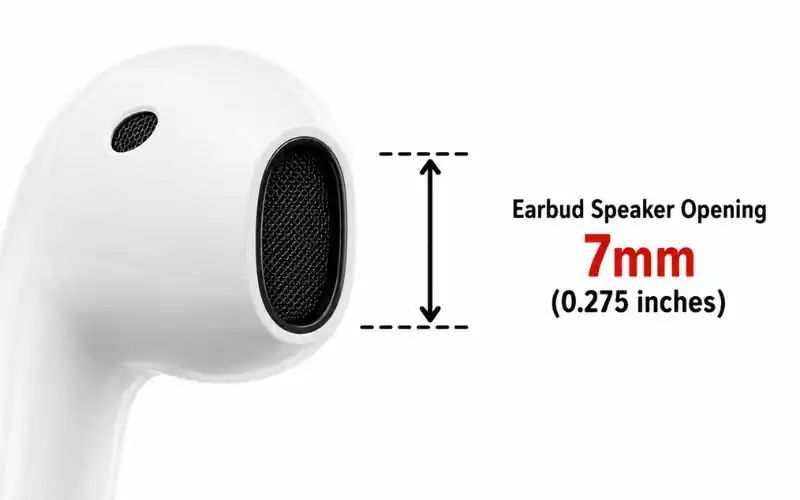
The speaker opening on some earbuds measures close to 7mm wide, giving a modern, instantly recognizable example. Earbuds are built to fit comfortably inside the ear, so their internal components stay compact a 7mm opening is large enough to deliver clear sound while keeping the design lightweight.
Audio devices depend on precise millimeter sizing to balance comfort and performance, where even a 1mm difference can change fit and sound quality. Since most people use earbuds daily for music, calls, or videos, this is a genuinely practical way to picture how small 7mm actually is.
Frequently Asked Questions
Yes. 7mm equals about 0.275 inches, which is slightly bigger than a quarter inch.
It looks similar to a small pea, a blueberry, or a tiny jewelry bead.
Compare it with your little fingernail, a small pea, or a shirt button.
Yes, 7mm is a small measurement commonly used for jewelry, electronics, beads, and screws.
Common examples include peas, blueberries, pencil erasers, small marbles, and earbud openings.
Conclusion
Now you have a clear picture of how big 7mm really is. This measurement equals 0.275 inches or 0.7 centimeters, making it small but still easy to notice in everyday life.
Objects like peas, blueberries, jewelry beads, shirt buttons, screw heads, and earbud openings all help build a simple mental image of this size, which is especially useful when you don’t have a ruler on hand and just need a quick estimate.
Understanding millimeter measurements makes shopping, crafting, electronics work, and everyday DIY projects easier. Once you connect 7mm to something familiar, estimating the size becomes second nature.