How big is 5 cm? 5 centimeters equals 1.97 inches or 50 millimeters almost exactly 2 inches, making it a small-to-medium measurement that’s easy to notice and compare visually. It’s not a large size, but it’s genuinely big enough to spot at a glance without much effort.
This measurement shows up constantly in schools, product dimensions, electronics, household items, and crafts. Below, you’ll find 22 everyday objects close to this size, a full conversion breakdown, and practical tips for visualizing 5 cm without ever needing a ruler.
5 cm in Different Units
| Unit | Value |
|---|---|
| Centimeters | 5 cm |
| Inches | 1.97 inches |
| Millimeters | 50 mm |
| Meters | 0.05 m |
| Feet | 0.164 ft |
This means 5 cm is almost equal to 2 inches, making it a genuinely noticeable and practical everyday measurement.
What Does 5 cm Look Like?
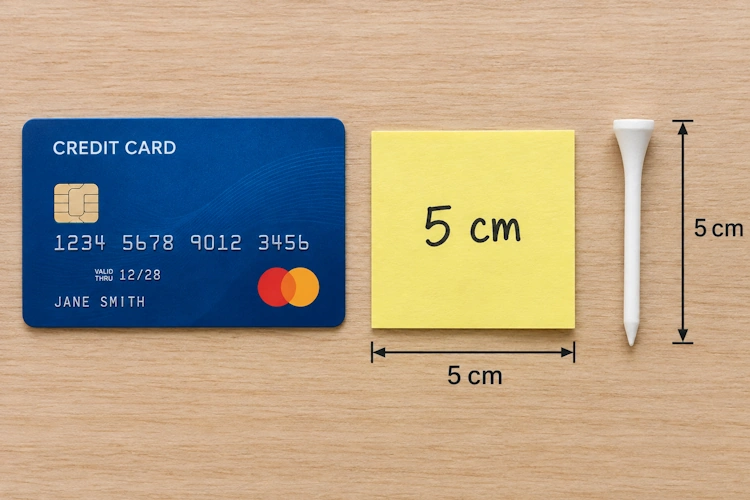
Without a ruler nearby, you can still estimate 5 cm using familiar objects around you. It’s close to the width of a credit card, the length of a small sticky note, or the size of compact accessories like a perfume cap or a golf tee.
Because it’s larger than tiny measurements like 1 cm or 2 cm, it’s much easier to recognize quickly. Once you start noticing objects around this size, spotting 5 cm becomes genuinely automatic.
22 Everyday Things That Are About 5 cm Big
Understanding 5 cm becomes much easier once you compare it with objects you already use every day. These comparisons help you build a genuinely clear visual sense of this measurement in real, practical situations.
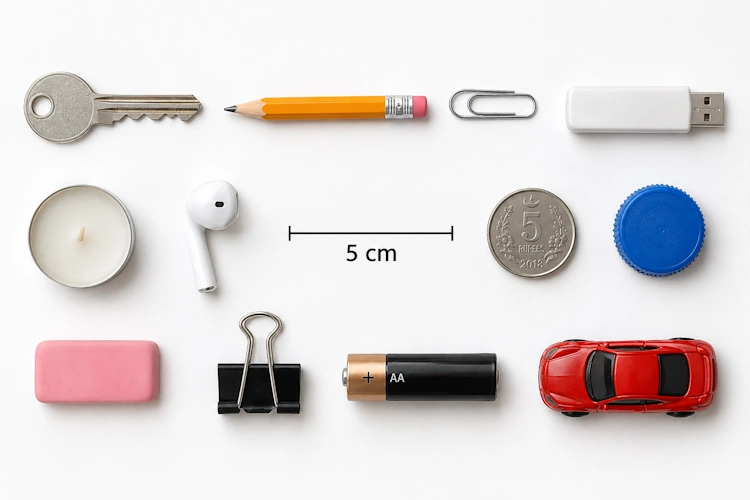
1. Credit Card Width Section
The shorter width side of a standard credit card is close to 5 cm. Since cards get used daily for shopping and payments, they’re a genuinely familiar reference, and their flat, rectangular shape makes the comparison quick and accurate.
2. A Standard AA Battery
An AA battery measures about 5.0 cm in length and 1.4 cm in diameter — a size that fits neatly into toys, remote controls, and flashlights. Since most homes have a few lying around, batteries offer one of the fastest, most convenient 5 cm references available.
3. A Golf Tee
A standard golf tee is a small device used to elevate a golf ball off the ground, and many common tee sizes land close to 5 cm tall. Golf tees are compact, familiar to anyone who’s played or watched the sport, and easy to picture even without one in hand.
4. Sticky Note Length
The side length of a small sticky note can measure around 5 cm. These notes are used constantly in schools, offices, and homes for quick reminders, and their square shape makes visual comparison simple and reliable.
5. A House Key
A house key is small but essential, typically measuring somewhere between 5 and 10 cm in length, with many falling right around the 5 cm mark for the metal blade portion. Since keys are carried by nearly everyone, they’re a genuinely practical, always-available reference.
6. A Small Cookie’s Diameter
A small round cookie can have a diameter close to 5 cm. Food items are naturally easy to visualize because people see and handle them so regularly, and a cookie’s circular shape makes the comparison genuinely simple.
7. A Computer Mouse’s Width
The width of a standard computer mouse often measures close to 5 cm. Since mice get used daily in homes, schools, and offices, their ergonomic shape offers a modern, practical example for this exact measurement.
8. Playing Card Height Section
Part of a standard playing card’s height, when visually divided, lands close to 5 cm. Since cards are a common household and entertainment item, their familiar rectangular design makes size comparisons genuinely easy.
9. A Mini Flashlight
A small pocket flashlight can measure around 5 cm in length. These compact tools are used for emergencies and travel, and their cylindrical shape makes them an easy, practical household reference to picture.
10. A Standard Pencil Eraser
An eraser is a simple correcting tool that comes in a range of sizes, with common ones falling between 2 and 5 cm — landing right at 5 cm for many standard blocks. Since erasers sit in nearly every pencil case, they’re a genuinely familiar reference for this measurement.
11. A USB Flash Drive
A USB flash drive is a small, portable storage device, and many compact models measure close to 5 to 7 cm in length. Since these plug into computers and laptops constantly, they offer a genuinely modern, tech-based comparison for 5 cm.
12. A Perfume Bottle Cap
The cap of a small perfume bottle often measures around 5 cm tall. These personal care products are commonly used for grooming, and their stylish, compact size makes them an easy, recognizable reference for medium-small measurements.
13. A Doorbell Button Plate
The width of some compact doorbell plates can measure close to 5 cm. Found on homes and apartments everywhere, their fixed, visible size makes them a genuinely relatable everyday example.
14. A Tennis Ball’s Diameter
A tennis ball has a diameter slightly larger than, but close to, 5 cm (official tennis balls measure about 6.7 cm). Since sports equipment is familiar to so many people, its round shape still offers a useful reference point for this general size range.
15. Travel-Size Hand Sanitizer
A pocket-size hand sanitizer bottle can measure around 5 cm in height. These are commonly carried in bags and pockets for hygiene on the go, and their compact design makes them an easy, modern everyday comparison.
16. A Small Sauce Bowl
The width of a tiny sauce bowl can land close to 5 cm. These small bowls are common in kitchens and restaurants, and their round shape makes visual comparison simple and genuinely effective.
17. A Small Padlock
A small padlock is a handy security device that measures about 3 to 7 cm in height, with plenty of common sizes landing right around the 5 cm mark. Usually made from metal or durable plastic, padlocks offer a solid, tactile reference for this measurement.
18. Bottle Cap Diameter
The diameter of a bottle cap typically ranges from about 2 to 5 cm, with larger jar lids landing close to the full 5 cm mark. This directly affects how well the cap seals the container, making it a genuinely practical, everyday reference.
19. TV Remote Button Area
The button section width of some slim TV remotes can measure close to 5 cm. Since remotes are used daily in nearly every home, their shape and size are easy to recognize instantly, making them a genuinely practical reference object.
20. A Compact Mirror
A small compact mirror often has a diameter around 5 cm. Carried in purses and travel bags for quick personal touch-ups, their circular shape helps make this dimension genuinely easy to understand at a glance.
21. A Small Juice Box
The width of a small juice box can measure close to 5 cm. Common among kids and adults during travel or meals, their boxy shape makes size comparison simple and genuinely relatable.
22. A Standard Matchbox
The width of a standard matchbox is often close to 5 cm. A common household item used in kitchens and for outdoor activities, its compact rectangular shape helps make this measurement genuinely clear and easy to compare.
5 cm vs. Other Common Sizes
Seeing 5 cm next to sizes you already know makes it easier to place:
- 1 cm: very tiny
- 2 cm: small
- 5 cm: noticeable small-to-medium size
- 10 cm: clearly larger, roughly double
This step-by-step comparison helps you see exactly how measurements grow from one size to the next.
Why Understanding 5 cm Matters
Understanding a measurement like 5 cm is genuinely useful in daily situations — checking product sizes while shopping online, organizing small items, or measuring compact tools around the house. Many products are specifically designed around centimeter dimensions, so being able to visualize 5 cm helps you avoid confusion and estimate sizes more confidently.
How to Visualize 5 cm Without a Ruler
You don’t always need a ruler to estimate 5 cm. By using familiar objects like a sticky note, a computer mouse, or a small bowl, you can quickly recognize this measurement in everyday situations. With regular practice, your eyes naturally get better at estimating similar sizes on their own.
Common Mistakes When Estimating 5 cm
One common mistake is confusing centimeters with inches — since inches are the larger unit, people sometimes imagine 5 cm as noticeably bigger than it actually is. Another frequent issue is underestimating medium-small measurements in general. Leaning on real-life comparisons, like the examples above, genuinely helps improve accuracy and avoid these kinds of mix-ups.
Frequently Asked Questions
5 cm equals 1.97 inches.
It’s considered a small-to-medium measurement noticeable, but still compact.
Compare it with objects like a sticky note, a matchbox, a computer mouse, or a credit card’s width.
Yes, it appears frequently in household items, electronics, personal care products, and packaging.
Examples include matchboxes, small bowls, sticky notes, compact mirrors, golf tees, and AA batteries.
Conclusion
So, how big is 5 cm?
It’s a small-to-medium measurement equal to 1.97 inches or 50 millimeters, and it shows up constantly in everyday objects you already see and handle regularly. By leaning on simple references like a credit card, a golf tee, or a small sticky note, you can easily understand and estimate this size without ever needing a ruler.