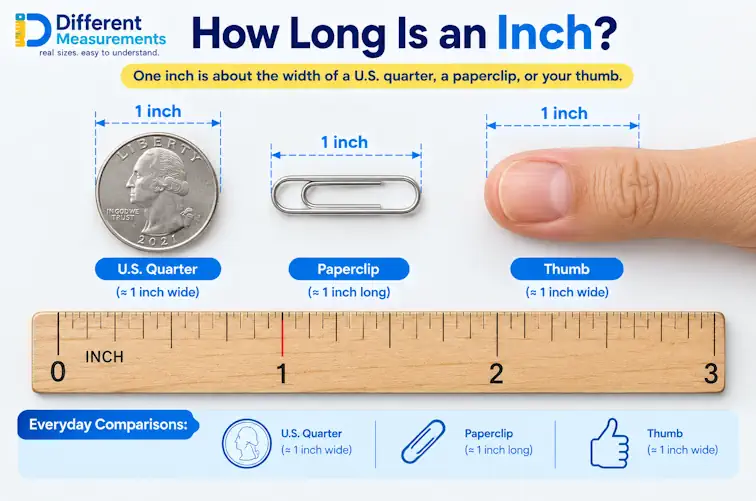
1 inch is equal to exactly 2.54 centimeters (25.4 millimeters). It is also about the width of an adult thumb and nearly the diameter of a US quarter.
An inch is one of the most common units of length, used on screens, furniture, screws, and paper. It is small enough to miss when you are estimating by eye, but it appears in so many everyday measurements that it is worth picturing clearly.
This guide gives you the exact conversions, eight everyday objects close to one inch, and simple ways to estimate an inch when no ruler is nearby.
Key Takeaways
- 1 inch equals exactly 2.54 centimeters, or 25.4 millimeters. This value has been the international standard since 1959.
- 1 inch is one-twelfth of a foot and one-thirty-sixth of a yard.
- A US quarter is 0.955 inch across, so it is a very close match for 1 inch.
- The width of an adult thumb is often near 1 inch, but it varies from person to person.
- Many everyday objects are approximately 1 inch, but only a few are standardized, so always confirm with a ruler when accuracy matters.
1 Inch Conversion Table
| Unit | Equal to 1 inch |
|---|---|
| Centimeters (cm) | 2.54 cm |
| Millimeters (mm) | 25.4 mm |
| Meters (m) | 0.0254 m |
| Feet (ft) | 0.0833 ft (1/12 ft) |
| Yards (yd) | 0.0278 yd (1/36 yd) |
| Miles (mi) | 0.0000158 mi |
| Micrometers (µm) | 25,400 µm |
Nearby Sizes in Centimeters
| Inches | Centimeters |
|---|---|
| 1/2 in | 1.27 cm |
| 3/4 in | 1.91 cm |
| 1 in | 2.54 cm |
| 1 1/4 in | 3.18 cm |
| 1 1/2 in | 3.81 cm |
| 2 in | 5.08 cm |
What Does 1 Inch Look Like?
One inch is roughly the length of the top joint of your thumb, the width of a quarter coin, or the short side of a standard paperclip. Picture something a little bigger than a fingertip and a little smaller than a pen cap, and you are close.
Because an inch is small, it is easiest to picture as a visible segment on a ruler. Find the first numbered mark on an inch ruler: the space from zero to that mark is one inch.
8 Everyday Objects Close to 1 Inch
Real products vary between manufacturers, so treat these as helpful reference points, not exact specifications. Items marked “about” are approximate.
1. A US Quarter (Diameter)
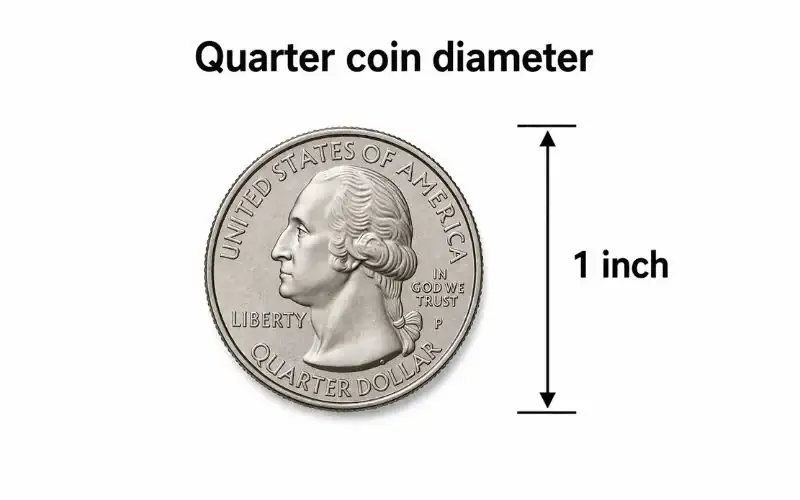
A US quarter measures 0.955 inch (24.26 mm) across. That is just under a full inch, which makes it one of the most reliable coin references you can carry.
2. An Adult Thumb (Width)
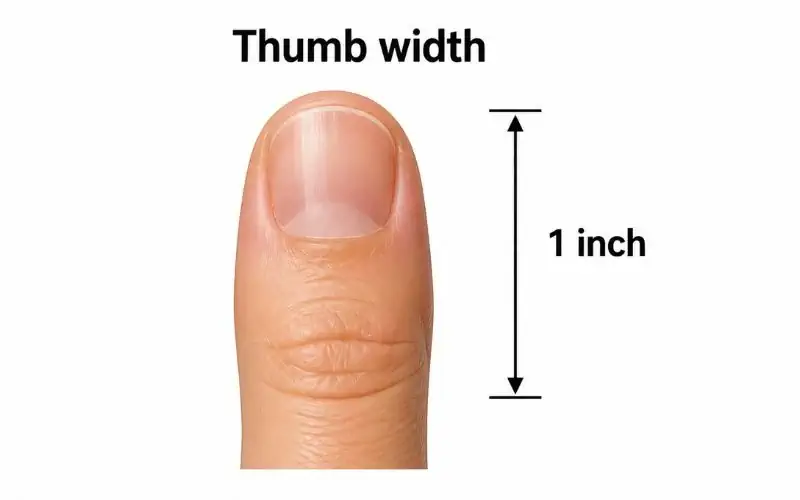
For many adults, the width of the thumb across its widest point is close to 1 inch. Hand sizes vary, so measure your own thumb against a ruler once and remember the result.
3. A Standard Paperclip (Short Side)
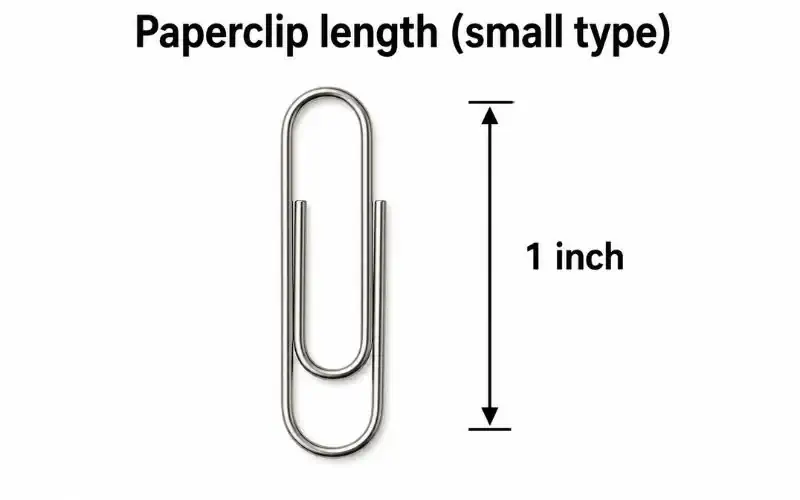
A small standard paperclip is about 1 inch long along its short side. Paperclip sizes are fairly consistent, so this is a dependable desk reference, although larger clips are longer.
4. A Plastic Bottle Cap (Diameter)
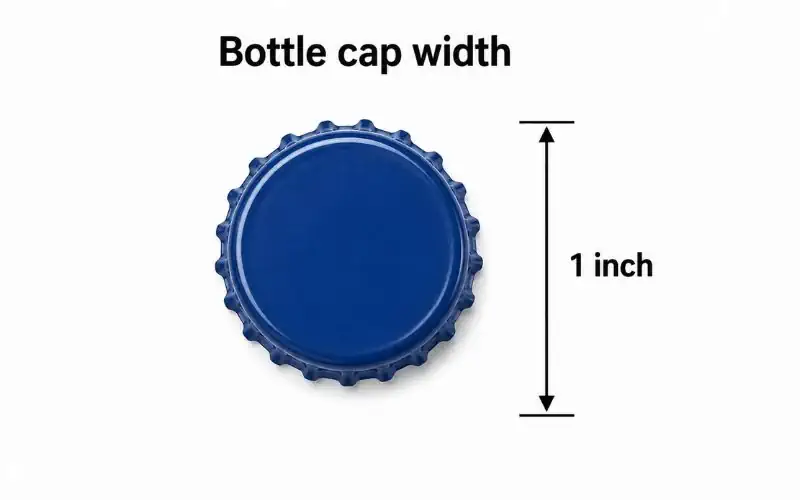
Many standard plastic bottle caps are about 1 inch across, although they range from roughly 0.8 to 1.1 inches depending on the bottle. They are easy to find and easy to line up with other objects.
5. A 1-Inch Wood Screw
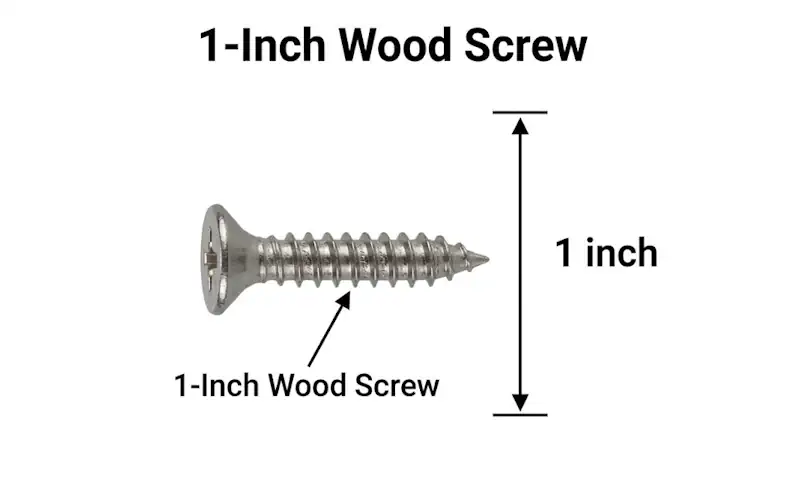
A 1-inch wood screw is a real hardware size, sold by length. Builders use these for thin trim, small hinges, and light fastening where a longer screw would come out the other side. If you need a true 1-inch reference, a hardware store will have one.
6. A Standard Page Margin
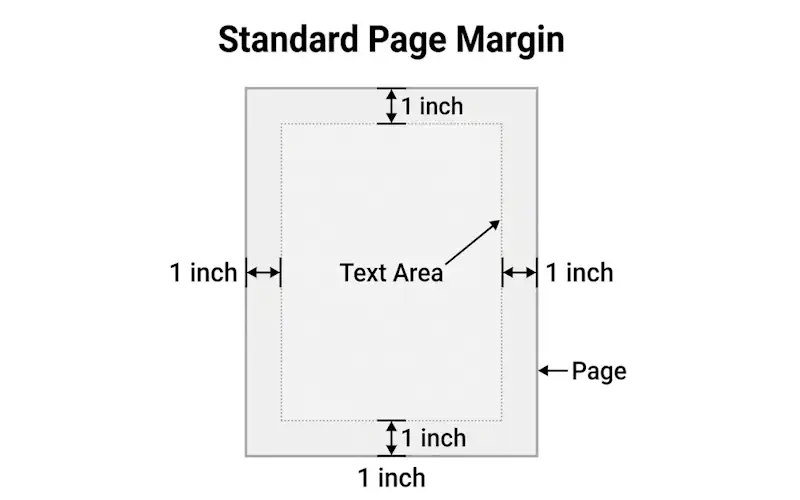
Microsoft Word and Google Docs set page margins to 1 inch on all four sides by default. Since the margin is defined as exactly 1 inch, it is a useful reference when you are working with documents, though most people only notice it as the white border.
7. A Key Head (Width)
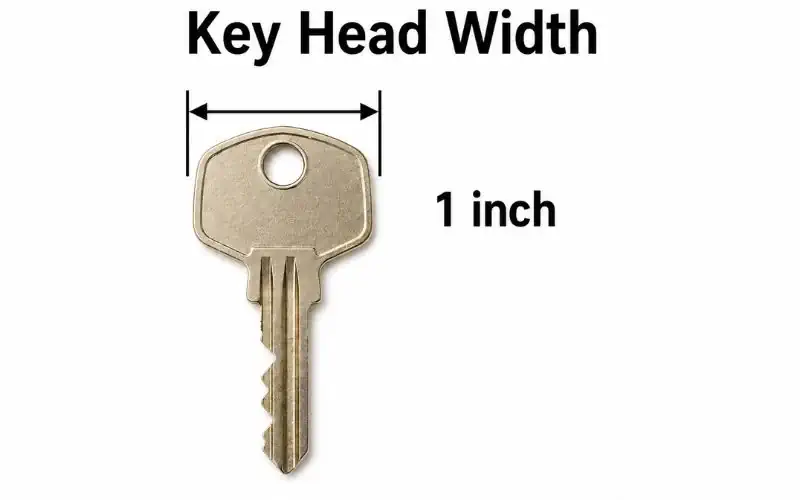
The top section of many house keys is about 1 inch wide. Keys are carried daily, so they are always available as a reference. Key sizes vary by lock and brand, so use this as an approximate guide.
8. A Compact USB Flash Drive (Width)
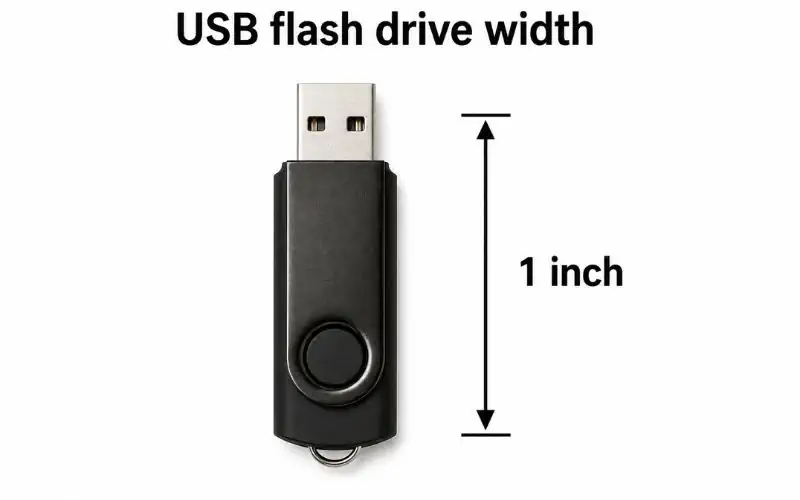
Many compact USB flash drives are about 1 inch wide, although designs differ. A flash drive is rectangular, so its straight edges make it easy to compare against other objects.
How to Estimate an Inch Without a Ruler
- Use your thumb. The top section of your thumb is roughly 1 inch wide. Check it once against a ruler.
- Use a quarter. Place a US quarter against the object you are measuring. It is just under an inch across.
- Use a paperclip. Hold a standard paperclip against the item for a quick, rough check.
- Use a credit card. A standard bank card is 2.125 inches on its short edge, so about half of it is a little over 1 inch.
- Use a known object. Keep a 1-inch wood screw or a small piece of cut cardboard in your toolbox for quick reference.
1 Inch Compared to Other Common Sizes
| Size | How it compares to 1 inch |
|---|---|
| 1/2 inch (1.27 cm) | Half as long |
| 3/4 inch (1.91 cm) | About a quarter shorter |
| 1 1/2 inches (3.81 cm) | Half again as long |
| 2 inches (5.08 cm) | Twice as long |
| 1 foot (12 inches) | 12 times as long |
| 1 centimeter (0.39 in) | About 2.5 times shorter |
Common Mistakes When Estimating an Inch
- Confusing inches with centimeters. 1 inch is 2.54 cm, not 1 cm. Mixing them up makes an item look more than twice as large as it is.
- Assuming every common object is exactly 1 inch. Coins, caps, keys, and paperclips vary by type and brand.
- Using a thumb as a precise tool. Thumb width depends on the person, so it works for rough estimates only.
- Assuming a dice is 1 inch. Standard game dice are usually about 16 mm (0.63 inch) on each side, which is noticeably smaller.
- Treating a page margin as a physical object. Margins are a setting on a document, so they are a reference only when you are working with that document.
Conclusion
An inch equals exactly 2.54 centimeters, and it is easiest to picture as the width of a US quarter or the top section of your thumb. Keep one or two of these references in mind, and you will be able to judge small lengths quickly. When accuracy matters, measure with a ruler.
FAQs
1 inch equals exactly 2.54 centimeters.
There are exactly 25.4 millimeters in 1 inch.
There are 12 inches in one foot, so one inch is one-twelfth of a foot.
It looks about like the width of a US quarter, the width of an adult thumb, or the short side of a paperclip.
Yes, for a rough estimate. Use your thumb width, a US quarter, or a paperclip, then confirm with a ruler if accuracy matters.
Yes, slightly. 1 inch is 2.54 cm, so it is about half a centimeter longer than 2 cm.
The inch remains common in the United States and in product sizing for screens, furniture, tools, and hardware, even in countries that use metric for most other things.