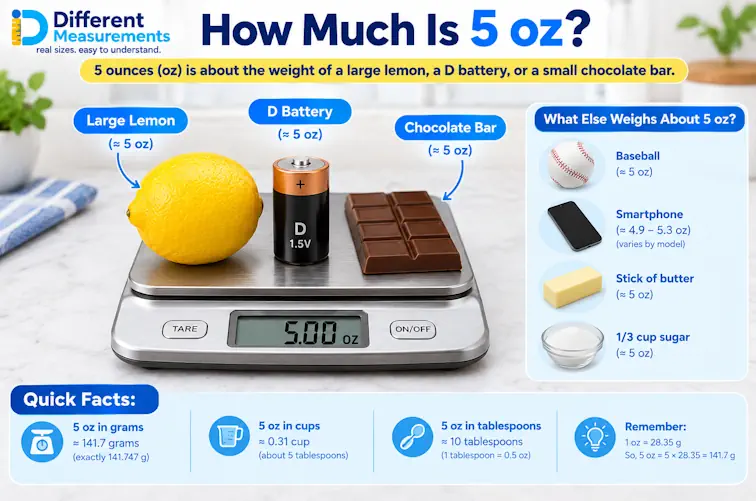
5 oz by weight is equal to 141.75 grams, or about 5/16 of a pound. 5 fl oz by volume is equal to 147.9 ml, or 5/8 of a cup.
Five ounces sounds like a small amount, and it is a common size for food packages, recipes, drinks, and small objects. The tricky part is that “oz” can mean weight or volume, and the two do not give the same number of grams or milliliters. Once you know which one you are dealing with, the conversion is simple.
This guide explains both meanings, gives you a full conversion table, shows how to measure 5 oz without a scale, and lists twelve everyday items that weigh or hold about 5 oz.
Key Takeaways
- 5 oz by weight equals 141.75 grams, which is 0.3125 pounds.
- 5 fluid ounces by volume equals 147.9 ml, which is 0.625 cups, or 10 tablespoons.
- A large lemon, a D battery, and a small chocolate bar are all close to 5 oz by weight.
- Ten level tablespoons of liquid make 5 fluid ounces, and a standard single wine pour is also about 5 fluid ounces.
- For solid food, read the label or use a scale. For liquids, measuring spoons and cups work well.
5 oz Conversion Table
| Unit | 5 oz equals |
|---|---|
| Grams (weight) | 141.75 g |
| Kilograms (weight) | 0.142 kg |
| Pounds (weight) | 0.3125 lb |
| Milliliters (volume) | 147.9 ml |
| Liters (volume) | 0.148 L |
| Deciliters (volume) | 1.48 dl |
| Cups (volume) | 0.625 cup (5/8 cup) |
| Tablespoons (volume) | 10 tbsp |
| Teaspoons (volume) | 30 tsp |
Note that the weight rows and the volume rows describe two different things. Use weight for solid food, mail, and most objects. Use volume for liquids like water, juice, and wine.
Weight Ounces Versus Fluid Ounces
A weight ounce measures how heavy something is. A fluid ounce measures how much space a liquid takes up. For water, the two line up closely, because water weighs about one gram per milliliter. For thicker or lighter liquids, the gap grows. Honey weighs noticeably more than water per fluid ounce, and oil weighs a little less.
This is why a recipe that says “5 oz of flour” should be weighed, while “5 fl oz of milk” should be measured in a liquid measuring cup. When a recipe is unclear, a scale settles the question in seconds.
How to Measure 5 oz Without a Scale
For liquids: Use a measuring cup. Five fluid ounces fills a cup to just past the halfway mark, around the 5/8 line. Ten level tablespoons also make 5 fluid ounces.
For solid food: Estimate by size, but treat the result as rough. A piece of cooked meat about the size of your flat palm is often in the 4 to 6 oz range, so pick the middle. A standard onion, a medium lemon, or a small pear is a useful approximate guide.
For small objects: A regulation lacrosse ball weighs close to 5 oz. Check the spec for the product you have, since sizes and standards differ.
12 Everyday Items That Are About 5 oz
Items marked “about” vary by variety, brand, or ripeness. Items marked “exact” are standardized products or labeled packages.
1. A Large Lemon (About)
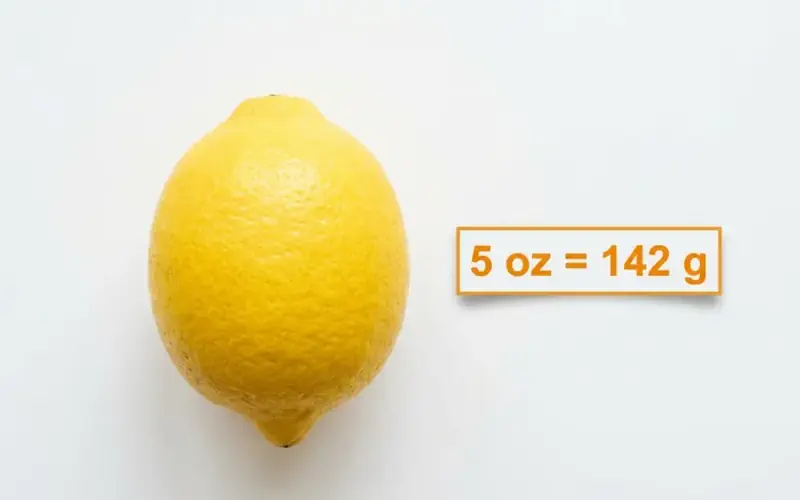
A large, firm lemon often weighs close to 5 oz. Weight varies with variety and ripeness, so a thick-skinned lemon may be heavier than a thin-skinned one. Keep in mind that most of a lemon is peel, pith, and water, so a 5 oz lemon yields only two or three tablespoons of juice.
2. A Regulation Lacrosse Ball (About)

A lacrosse ball is a solid rubber ball whose weight is set by the sport’s rules. It is commonly about 5 oz, which makes it a dependable hand-held reference. It feels heavier than its size suggests.
3. A D Battery (About)
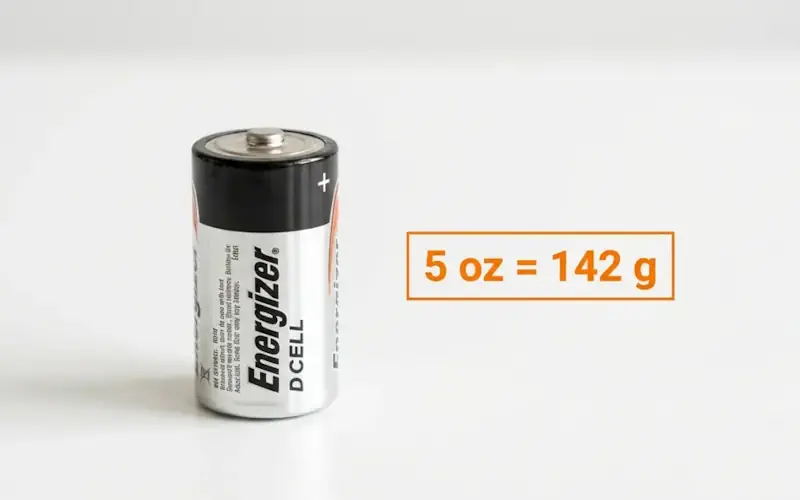
A single alkaline D battery is close to 5 oz. The weight comes from the dense chemistry inside the steel can, not the casing. A set of D cells feels much heavier than you might expect.
4. A Sleeve of Three Golf Balls (About)
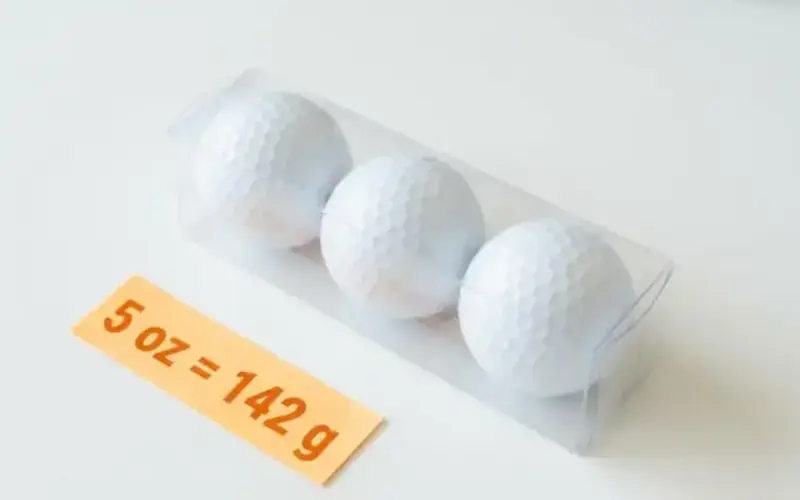
Golf balls are capped at 45.93 grams (about 1.62 oz) each under the rules, so three balls come to about 138 grams. Adding a plastic sleeve brings the total near 5 oz. Because the weight is so tightly controlled, this is one of the most consistent references in the list.
5. A Medium-Large Beefsteak Tomato (About)
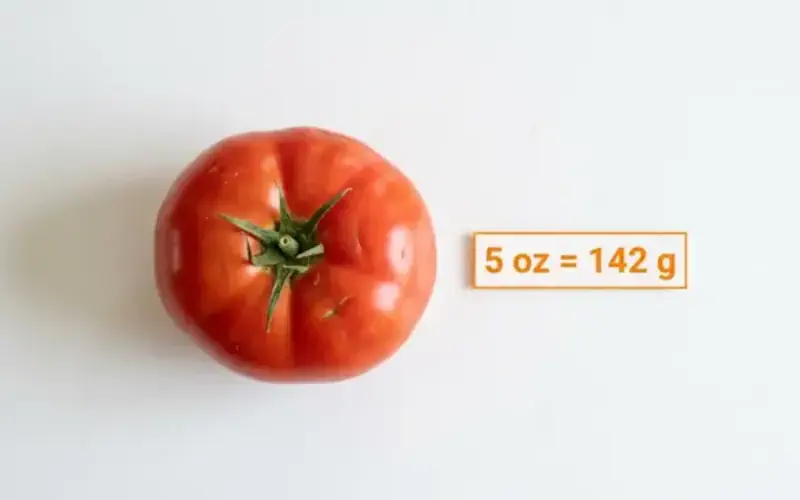
A large slicing tomato can reach about 5 oz. Most of its weight is water, so it weighs more than many people expect. Smaller tomatoes like Roma or cherry types weigh far less, usually around 2 to 3 oz each.
6. A Standard TV Remote With Batteries (About)
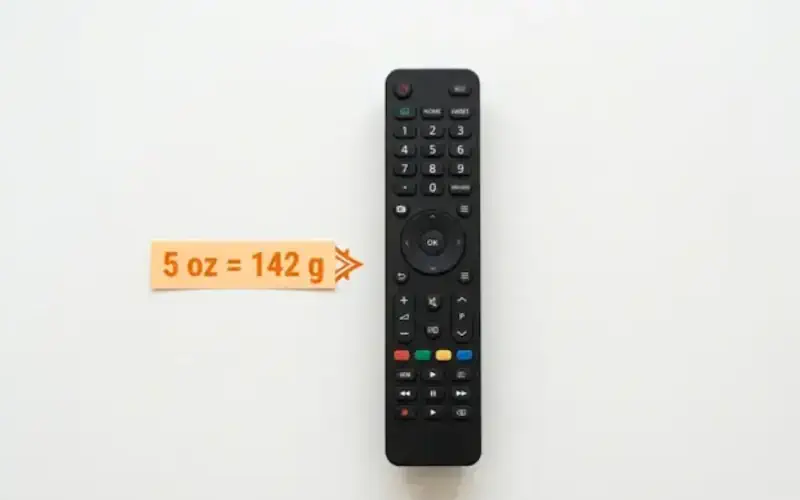
A typical cable-box or TV remote with batteries loaded is near 4 to 5 oz. Most of the weight comes from the batteries and the small circuit board rather than the plastic shell.
7. A Large Banana With Peel (About)

A large banana with the peel on weighs roughly 5 oz, and the peel alone is a substantial share of that. When a recipe calls for a banana by weight, it usually means the peeled fruit, so weigh it after peeling.
8. A Medium Yellow Onion (About)
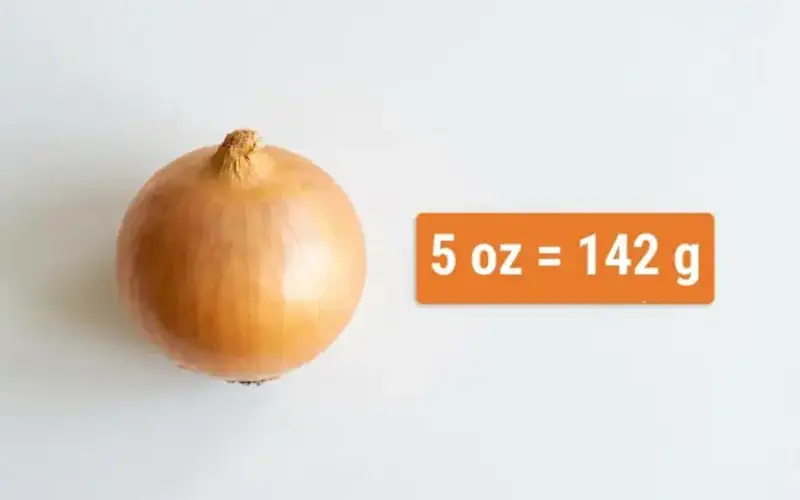
A standard cooking onion lands close to 5 oz. Onions are dense because they are packed with water and have little hollow space. “One medium onion” is a common unit in recipes, and its weight sits close to this figure.
9. Three Large Eggs in the Shell (About)
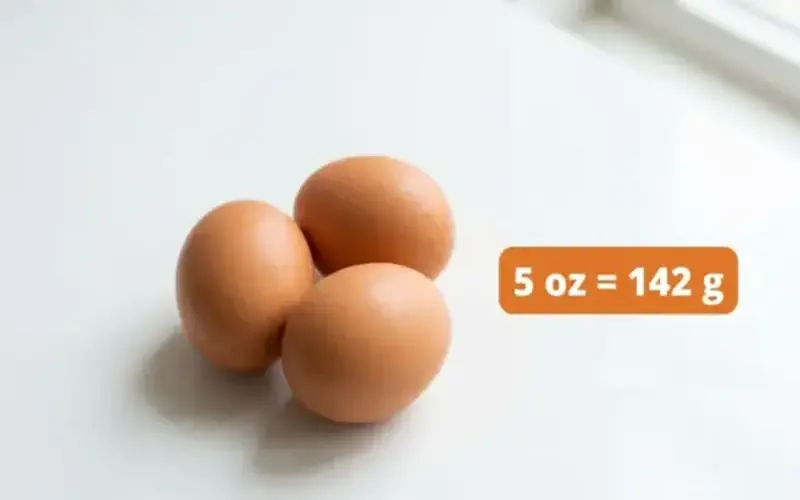
Large eggs in the US are graded to about 50 grams each in the shell, so three come to about 150 grams, just over 5 oz. Because egg sizes are graded, a carton of large eggs is very consistent, which makes eggs a steady reference.
10. A 5 oz Chocolate Bar (Exact).
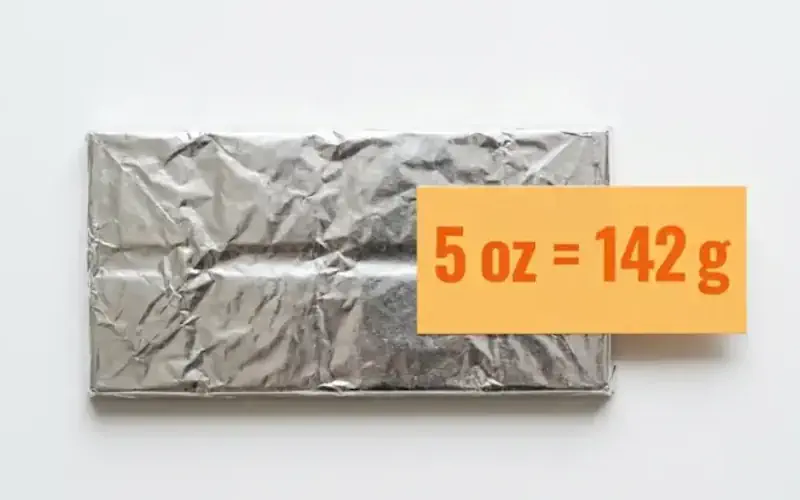
Many premium chocolate bars are sold in a 5 oz package with the net weight printed on the wrapper. Reading the label gives you a verified figure without a scale.
11. Six AA Batteries (About)

A six-pack of AA batteries weighs roughly 138 grams, very close to 5 oz. Each cell is around 23 grams, so you can also work out the weight by counting cells.
12. A Standard Glass of Wine (Volume)

A standard single pour of wine is about 5 fluid ounces, or 148 ml. This is a volume measure rather than weight. A correctly filled wine glass often looks only partly full, because the bowl is designed to leave room for swirling.
5 oz Compared to Other Common Sizes
| Size | How it compares to 5 oz |
|---|---|
| 4 oz | 1 oz less |
| 6 oz | 1 oz more |
| 8 oz (1/2 pound) | 3 oz more |
| 1/8 pound (2 oz) | 3 oz less |
| 1/4 cup (2 fl oz) | Less than half the volume |
| 1 cup (8 fl oz) | 3 fl oz more |
Common Mistakes When Converting 5 oz
- Calling 5 oz an eighth of a pound. An eighth of a pound is 2 oz. Five ounces is 5/16 of a pound, a little over a quarter.
- Treating weight and volume as the same. Five ounces of flour does not equal 5 fluid ounces of flour, because one is a weight and the other is a volume.
- Using a standard cup for every liquid. A cup holds 8 fluid ounces, so 5 fluid ounces is only five-eighths of it.
- Assuming all lemons, onions, or tomatoes weigh the same. Produce varies by variety, season, and ripeness, so use these as rough guides.
- Forgetting packaging. A product’s net weight excludes the box or can, while a gross weight includes it.
Conclusion
Five ounces equals 141.75 grams by weight and 147.9 ml by volume, and the difference matters most for thicker or lighter ingredients. Keep the table handy, use a scale for solid food when accuracy matters, and remember that a standard wine pour is about 5 fluid ounces.
FAQs
5 oz by weight equals 141.75 grams.
No. Weight and volume are different measurements. They are close only for water-like liquids.
5 fluid ounces equals 0.625 cups, or five-eighths of a cup. A weight of 5 oz does not convert to a fixed number of cups.
5 fluid ounces equals about 147.9 ml, which is commonly rounded to 148 ml.
5 fluid ounces equals 10 tablespoons.
5 oz equals 0.3125 pounds, or 5/16 of a pound.
For liquids, use a measuring cup or 10 tablespoons. For solid food, use a rough size estimate, or check the package label for the net weight.