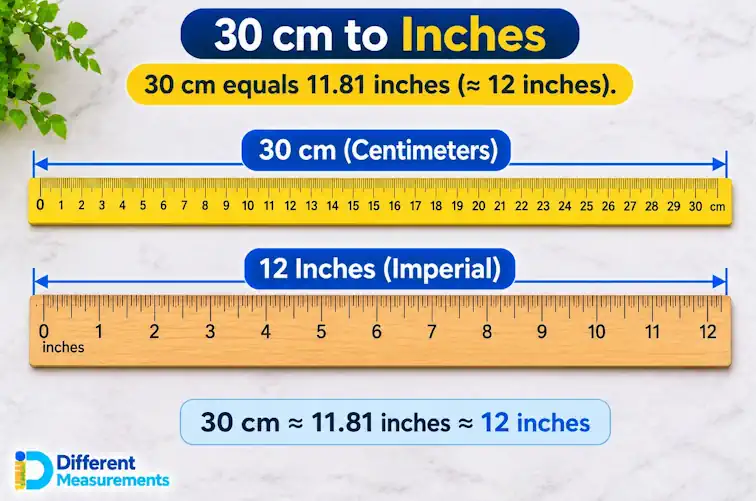
30 cm is equal to 11.81 inches (exactly 11.811 inches when carried to three decimals). It is also about 0.98 feet, which means it is just under one foot.
A 30 cm measurement is common on school rulers, shelf listings, craft patterns, and product specifications. Many people know it in centimeters but need inches when they shop online, read a US size chart, or follow a pattern written in imperial units. Converting 30 cm to inches takes one division, and this guide shows the exact value, the formula, a chart, and real objects that help you picture the length.
Key Takeaways
- 30 cm equals 11.81102362 inches, which rounds to 11.81 inches for everyday use.
- The formula is simple: divide centimeters by 2.54, because one inch is exactly 2.54 cm.
- 30 cm is about 11 13/16 inches in fractional form, which is the closest common fraction.
- 30 cm is 0.19 inch shorter than one foot (12 inches), so it is a close match but not a full foot.
- A standard 30 cm school ruler is almost the same length as a 12-inch ruler, which differs by only 0.48 cm.
30 cm to Inches: Quick Answer
| Measurement | Equivalent |
|---|---|
| 30 cm | 11.81102362 inches |
| Rounded to 2 decimals | 11.81 inches |
| Rounded to 1 decimal | 11.8 inches |
| Nearest 1/16 inch | 11 13/16 inches |
| In feet | 0.9843 feet |
The Formula for 30 cm to Inches
To convert any length from centimeters to inches, use this formula:
Inches = Centimeters ÷ 2.54
For 30 cm, the calculation is 30 ÷ 2.54 = 11.81102362 inches.
A quick alternative is multiplying by 0.3937, since one centimeter is about 0.3937 inches. 30 × 0.3937 = 11.811 inches, which gives the same answer to three decimals. The division method is more exact because 2.54 is the defined value of one inch.
Why Divide by 2.54?
The inch is defined as exactly 2.54 centimeters. Every inch equals 2.54 cm, so the number of inches in a given length is the number of centimeters divided by 2.54. Dividing by 2.54 is therefore not an approximation. It is the exact relationship between the two units.
30 cm to Inches Conversion Chart
| Centimeters | Inches |
|---|---|
| 25 cm | 9.84 in |
| 26 cm | 10.24 in |
| 27 cm | 10.63 in |
| 28 cm | 11.02 in |
| 29 cm | 11.42 in |
| 30 cm | 11.81 in |
| 31 cm | 12.20 in |
| 32 cm | 12.60 in |
| 33 cm | 12.99 in |
| 34 cm | 13.39 in |
| 35 cm | 13.78 in |
30 cm in Inches, Feet, and Other Units
| Unit | 30 cm equals |
|---|---|
| Inches | 11.81 in |
| Feet | 0.9843 ft |
| Feet and inches | 11.81 in (under 1 foot) |
| Millimeters | 300 mm |
| Meters | 0.3 m |
| Yards | 0.3281 yd |
How Big Is 30 cm in Real Life?
Picturing a length is easier with objects you already know. Here are five common items that come close to 30 cm.
1. A School Ruler
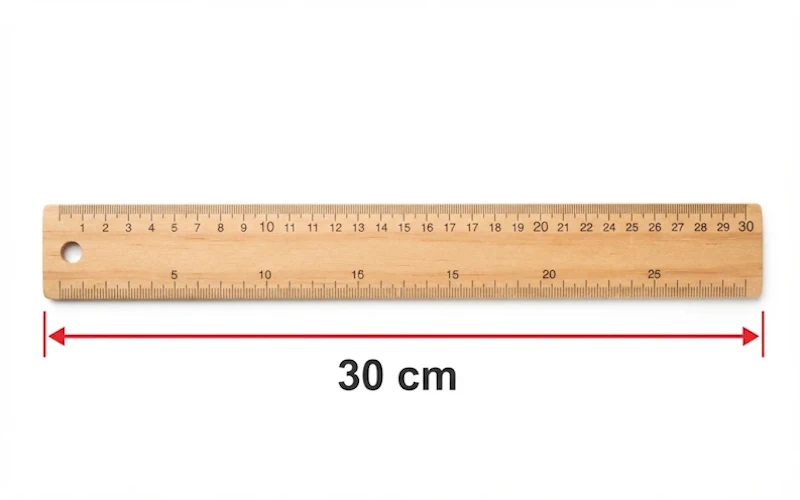
Most classroom rulers are exactly 30 cm long, so a metric ruler is the most direct reference. Lay one on a table and you can see the full length at once. Its inch side is usually 12 inches, which is 30.48 cm and only slightly longer.
2. An A4 Sheet of Paper, Long Side
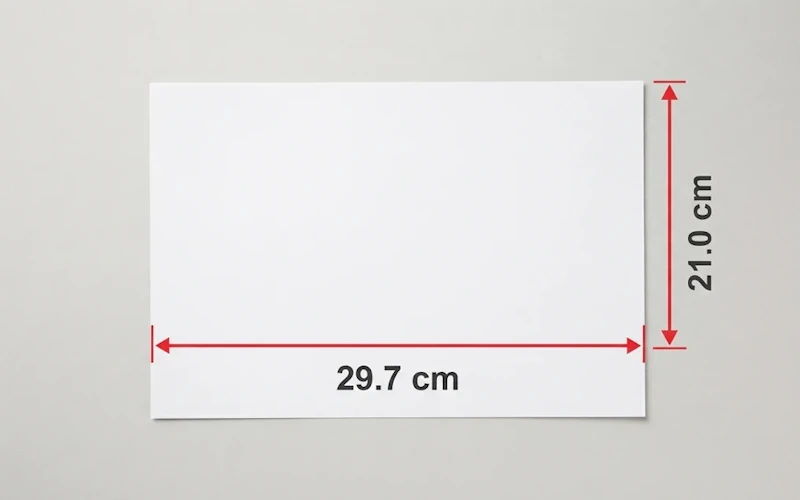
A4 paper measures 21 cm by 29.7 cm. Its long side is just under 30 cm, so a sheet placed upright on a desk gives you a close, always-available reference. Many home printers use A4 in countries outside the United States.
3. A Shelf Depth
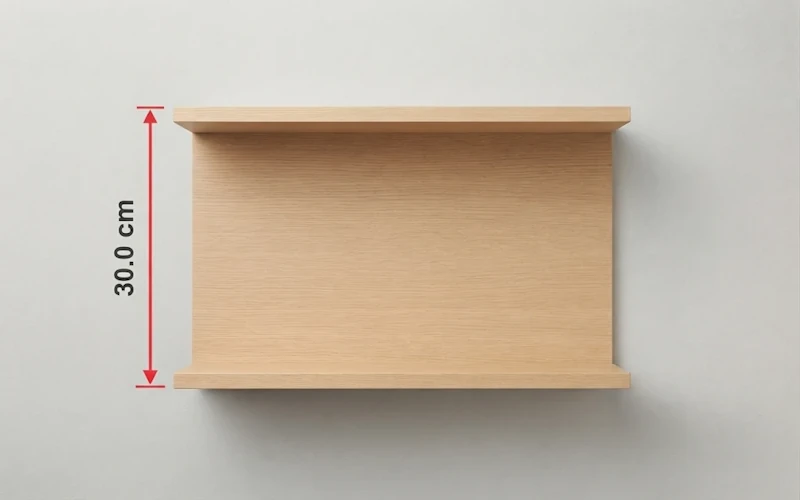
Many bookshelves and wall shelves are about 30 cm deep. Measure the shelf from front to back, and you have a practical reference for furniture and storage.
4. A Bread Knife
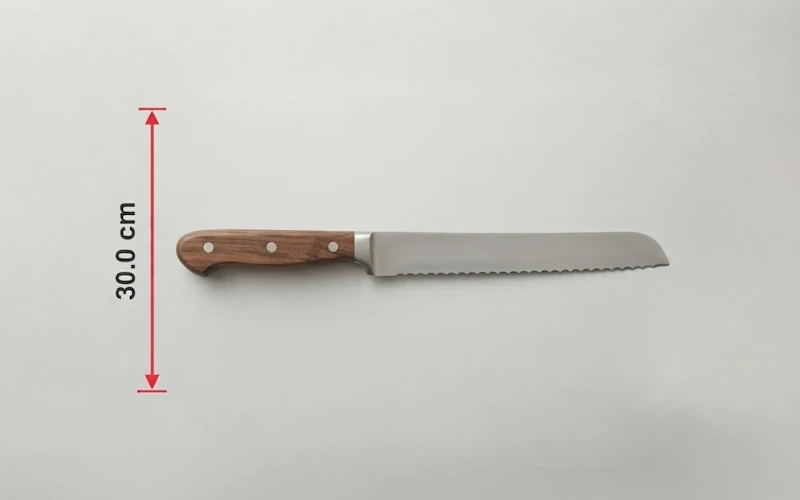
Bread knives often have blades around 20 to 25 cm, and their total length with the handle commonly reaches about 30 cm. Check the listed overall length before buying, since knife sizes vary by brand.
5. A Small Laptop Screen (Diagonal)
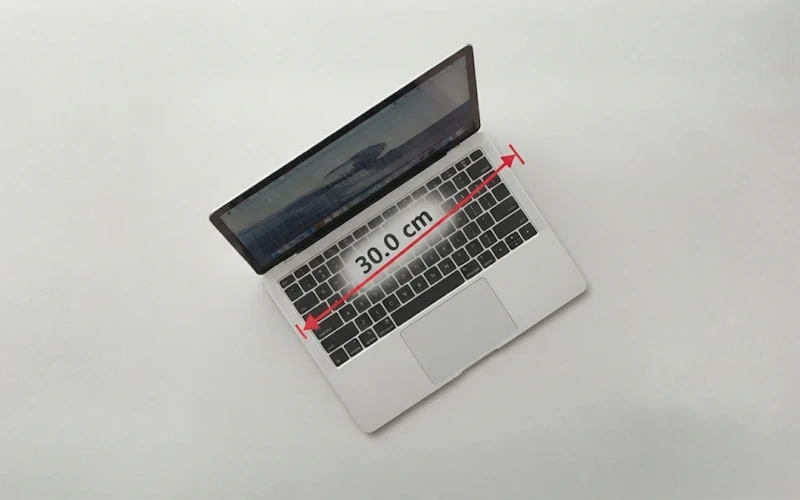
An 11-inch laptop screen measures about 28 cm across diagonally, and a 12-inch model is close to 30 cm. Screen sizes are measured diagonally, so the device body is smaller than this figure in width.
How to Estimate 30 cm Without a Ruler
- Use a sheet of A4 paper. Its long side is 29.7 cm, very close to 30 cm.
- Use a 12-inch ruler. Its length is 30.48 cm, so it is only a little longer. Remove a fraction of an inch to match 30 cm.
- Use one foot. A foot is 30.48 cm, so 30 cm is just under one foot.
- Use the width of three fingers. Three adult fingers placed side by side are about 2.25 inches wide, so about 5 finger groups come close to 11.25 inches. Measure your own fingers once to check.
- Use the numbers. Remember that 30 cm is 11.81 inches, which is about 1/16 of an inch under 11 13/16 inches.
30 cm to Inches in Fraction Form
When a tape measure or ruler is divided into fractions, 30 cm is closest to 11 13/16 inches. The decimal value is 11.8110, so the fraction is very close. For woodworking, sewing, and crafts, the fraction is easier to read on a standard tape than a decimal.
Common Mistakes When Converting 30 cm to Inches
- Treating 30 cm as exactly 12 inches. 30 cm is 11.81 inches, which is 0.19 inch shorter than a foot.
- Dividing by 2.54 the wrong way. To go from inches to centimeters, multiply by 2.54. To go from centimeters to inches, divide by 2.54.
- Rounding too early. Round only the final answer, especially when adding several measurements together.
- Assuming a ruler is exactly 12 inches long. Rulers vary slightly, so check the printed scale when accuracy matters.
- Mixing up 30 cm and 30 mm. 30 cm is 300 mm, so the difference is a factor of ten.
Conclusion
30 cm equals 11.81 inches, which is just under one foot. Use the formula of dividing by 2.54 whenever you need an exact figure, and keep the chart and real-life references handy for quick checks. When fit or accuracy matters, measure with a ruler or tape.
FAQs
30 centimeters equals 11.81 inches, or 11.81102362 inches when carried to more decimals.
Divide 30 by 2.54 to get 11.81 inches. You can also multiply 30 by 0.3937, which gives about 11.81 inches.
30 cm is 0.9843 feet, which is just under one foot.
30 cm is about 11 13/16 inches, which is the closest common fraction.
No. 30 cm is 11.81 inches, which is 0.19 inch shorter than 12 inches. A 12-inch ruler is 30.48 cm, a little longer than 30 cm.
It is about the length of a standard school ruler, the long side of an A4 sheet, or a shelf that is 30 cm deep.